

Ritani vs James Allen : Which Online Jeweler Is Better for Diamonds and Engagement Rings in 2026?
Choosing between Ritani and James Allen isn’t about which brand is legitimate—both are. The real decision comes down to how you want to buy your diamond: optimizing for the lowest possible price, maximizing visual inspection confidence, or planning for long-term upgrades and aftercare.
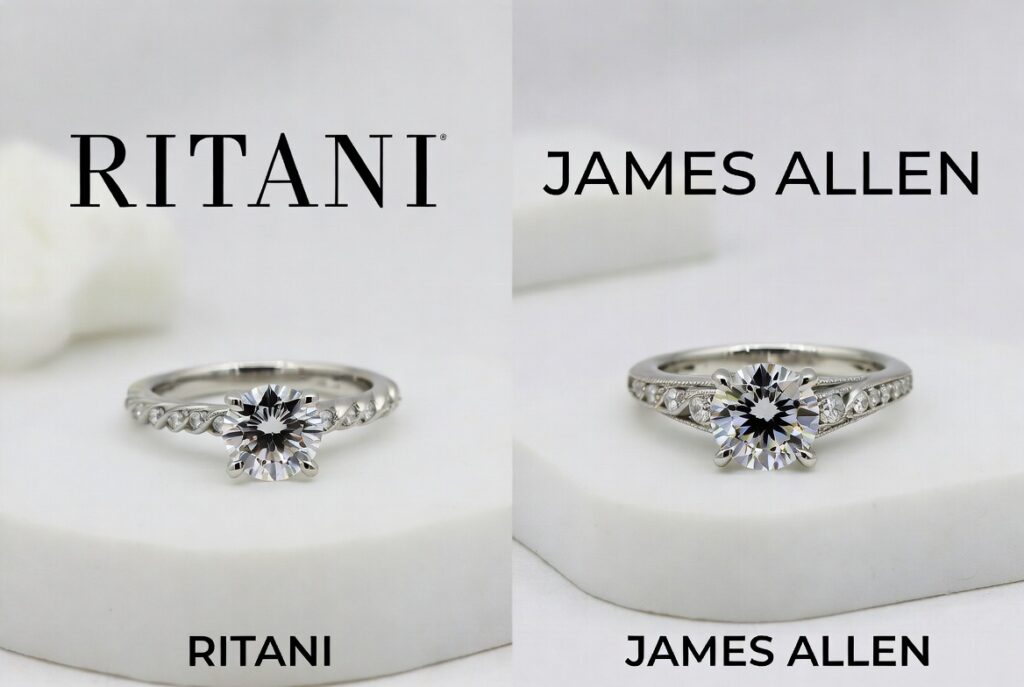
This in-depth comparison breaks down pricing, diamond quality risk, inspection tools, upgrade policies, and real buyer trade-offs so you can choose the retailer that best matches your priorities—and avoid costly mistakes.
Quick Verdict: Ritani vs James Allen
- You want the lowest possible price, especially on lab-grown diamonds
- You’re comfortable screening diamonds carefully to extract value
- You like the option of a free in-person preview in select locations
- You prioritize getting the best deal today over long-term upgrade planning
- You want best-in-class diamond inspection tools with 360° HD video
- You value confidence over sticker price, especially for SI clarity or lab diamonds
- You want a clear lifetime upgrade path (100% credit toward a 2× value diamond)
- You prefer a structured buying experience with strong aftercare and maintenance framing
Bottom Line: Ritani is typically the better choice for value-driven, price-savvy buyers, while James Allen is the safer choice for inspection-focused buyers who want flexibility to upgrade later.
Best Choice by Buyer Type
Buyer Priority | Better Choice |
Lowest lab-grown diamond price | Ritani |
Best online diamond inspection | James Allen |
Upgrade-focused buyers | James Allen |
Nervous about buying online | Ritani |
First-time diamond buyers | James Allen |
Long-term maintenance & aftercare | James Allen |
Ritani vs James Allen: Lab-Grown vs Natural Diamonds (At a Glance)
Diamond Type | Better Choice | Why |
Lab-grown diamonds | Ritani | Lower sticker prices if you screen carefully |
Lab-grown (confidence + upgrade) | James Allen | Strong visual tools + lifetime upgrade |
Natural diamonds (upgrade-focused) | James Allen | Clear 2× upgrade policy |
Natural diamonds (price-first) | Tie / Case-by-case | Pricing varies by stone |
Quick Comparison Between Ritani vs James Allen
Category | Ritani | James Allen |
Best for | Price hunters, lab diamond deals, price-match shoppers | Visual shoppers, upgrade-minded buyers, “see every inclusion” buyers |
Diamond shopping experience | Strong filters + value-forward positioning; “price transparency” messaging | Industry-leading 360° diamond video inspection (“Diamond Display Technology”) |
Returns | 30 days from shipment for eligible U.S. orders; prepaid insured label after contacting support | 30 days; original unworn condition; refund/exchange |
Warranty | Lifetime warranty for Ritani-label engagement rings/wedding bands (manufacturing defects) | Limited lifetime warranty; emphasizes maintenance services (e.g., prong tightening, polishing, rhodium plating, cleaning) |
Resizing | Commonly referenced as 1st-year complimentary resizing for U.S./Canada (varies by item/situation—confirm before purchase) | One free resize within first year; fees after; shipping terms apply |
Upgrade policy | More “price match” oriented than “lifetime upgrade” oriented | Lifetime upgrade: 100% credit toward a diamond at least 2x value (natural and lab) |
Try-before-you-buy | Free in-person preview program in select locations | Primarily online; showrooms exist, but core value is online visualization |
Read our full Ritani review
Read our full James Allen review
The Real Difference: Their Business Models Shape Your Outcome
Ritani: “Get the Best Diamond Price Online” (and Prove It)

Ritani positions itself heavily around value, including a Diamond Price Match Guarantee and “price transparency” messaging designed to reduce the fear of overpaying.
This matters most for lab-grown diamonds, where pricing volatility and supplier competition can be extreme. Ritani tends to appeal to shoppers who want to:
- Compare multiple listings quickly
- Push toward the lowest price for a given spec sheet
- Keep optionality (returns/exchange routes, plus in-person preview where available)
James Allen: “Inspect the Exact Diamond Like a Jeweler Would”

James Allen built its reputation on being able to see the actual stone with highly detailed 360° imaging. This is not a minor feature—it is the core reason many buyers choose James Allen even when another retailer is slightly cheaper.
That visualization advantage becomes decisive when you care about:
- Eye-cleanliness (especially SI1/SI2)
- Inclusion type and location (black crystal under the table vs feather near girdle)
- Transparency issues (common concern in some CVD lab diamonds)
- Optical symmetry cues (to the extent video reveals them)
Pricing: Who’s Cheaper, and When?
Lab-Grown Diamonds: Ritani Often Wins on Sticker Price (If You Screen Correctly)
If your goal is maximum carat per dollar, Ritani frequently comes out ahead—largely because lab inventory is broadly commoditized and price competition is intense.
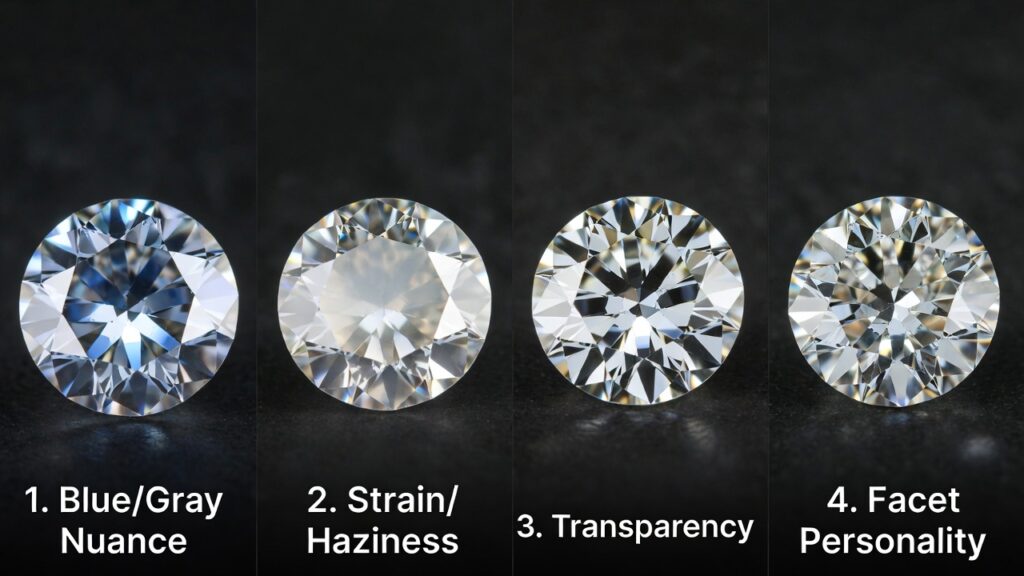
The lab diamond trap: two stones can share the same certificate grades yet vary materially in:
- Tint (blue/gray nuance)
- Strain / haziness
- Transparency
- Facet personality (“crushed ice” vs crisp pattern, shape-dependent)
Best Practice If You’re Using Ritani for Lab Diamonds
- Prioritize listings with strong imaging availability
- Use stricter cut parameters than “certificate minimums”
- Be conservative on clarity if you can’t inspect well
- Be extra careful with fancy shapes (oval/pear/radiant can mislead without strong visuals)
Where James Allen Lab-Grown Diamonds Win: Confidence, Screening Tools, and a Real Upgrade Path
James Allen is often not the absolute cheapest on lab-grown diamonds—but it compensates with best-in-class inspection tools and a clearly defined lifetime upgrade policy for lab diamonds, which can materially reduce “I overpaid / I mis-bought” regret.
1) Better visual due diligence (especially on lab-specific issues)
James Allen’s Diamond Display Technology emphasizes 360° HD views and up to 40x magnification, explicitly positioning it as a way to evaluate beyond the certificate.
That matters for lab-grown stones where the paper grades may not fully protect you from:
- Mild haze that kills sparkle in real lighting
- Subtle gray/blue nuance in near-colorless ranges
- Inclusion contrast (dark crystal vs white feather) that determines eye-cleanliness
2) Lifetime upgrade applies to lab-grown diamonds (not just natural)
This is a major differentiator if you want a “starter stone now, upgrade later” strategy. James Allen states that any loose lab-grown diamond purchased can be exchanged at 100% credit toward a replacement lab-grown diamond of at least 2x value (conditions apply, original grading document required). Read our Full James Allen review for lab-grown diamonds.
3) Consumer-friendly returns reduce risk on first purchase
James Allen advertises returns within 30 days (original, unworn condition) for refund or exchange.
4) Certification reality in 2026: IGI-heavy market + why that matters
James Allen actively merchandises IGI-certified diamonds (common for lab-grown).
This is increasingly relevant given GIA’s 2025 announcement that it will shift lab-grown assessments away from the traditional natural-diamond color/clarity nomenclature and toward descriptive terminology.
Practical implication: when shopping lab-grown, you’ll often be comparing IGI/GCAL-style reporting, so your visual inspection process becomes even more important—not less.
Best Practice If You’re Buying James Allen Lab-Grown Diamonds
- Use the 360°/high magnification video to screen for haze/transparency (sparkle should look “crisp,” not sleepy)
- In fancy shapes, compare multiple stones to avoid “good-on-paper, dull-in-person” outcomes
- Prefer diamonds with documentation you’re comfortable relying on long-term (and keep your original grading report if you want upgrade eligibility).
- If you expect you’ll want bigger later, treat the 2x upgrade rule as a budgeting constraint now (buy a stone you’ll be happy to “graduate” from).
Bottom line for lab-grown:
- Pick Ritani when your priority is lowest sticker price and you’re willing to do stricter screening.
- Pick James Allen when your priority is buying confidence (visual inspection) and you value a defined lifetime upgrade path for lab diamonds.
Natural Diamonds: James Allen Can Be More Competitive When You Price in Upgrade Value
Natural diamonds don’t behave like lab diamonds in pricing psychology or long-term strategy.
If you expect to upgrade later, James Allen’s lifetime upgrade policy (100% credit toward a diamond at least 2x value) can make it a better long-term economic choice—even if the upfront price is slightly higher—because the upgrade framework is clearly defined.
Diamond Inventory & Selection: “Selection Quality” Depends on Filters + Visuals
James Allen’s Edge: Seeing Inclusions Clearly Before You Buy
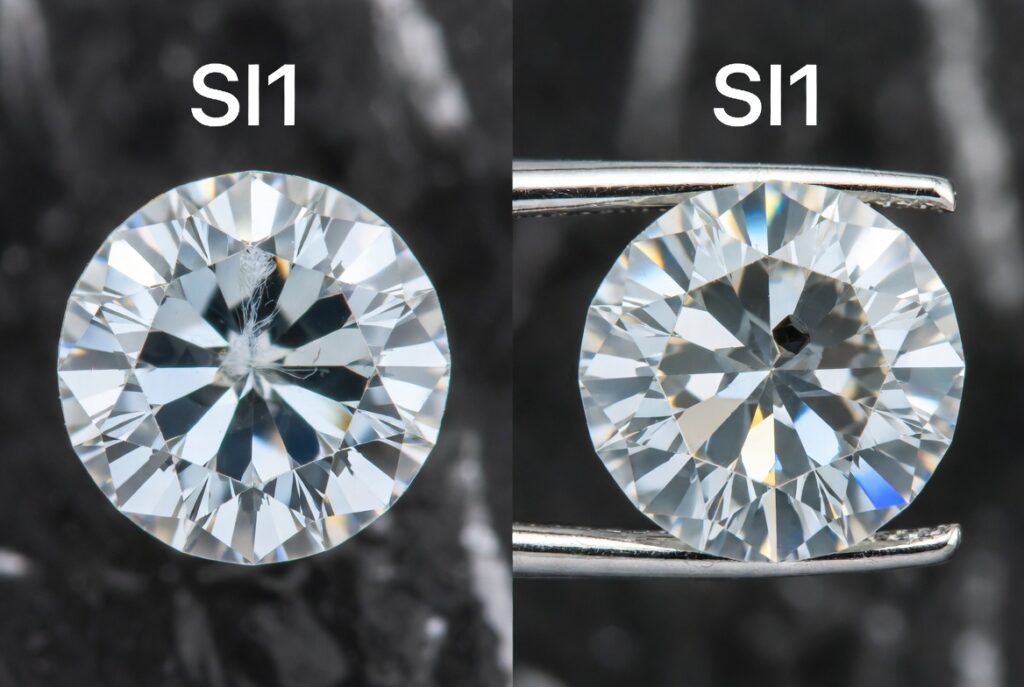
Many shoppers underestimate how much clarity grade can “lie” in practice.
An SI1 with a white feather near the edge can be a dream. An SI1 with a black crystal under the table can be a daily regret. James Allen’s 360° video is built to reduce that risk.
Best for:
- SI clarity buyers trying to stay eye-clean
- Near-colorless shoppers (G–I) who still want confidence
- Buyers who want certainty without relying solely on the certificate
Ritani’s Edge: Shopping Like a Pro on Price (Especially Lab)
Ritani’s value proposition is strongest when you already know what you want:
- Shape + target spread
- Minimum cut parameters
- Certification preference
- What compromises you will and won’t accept
Ritani’s “price transparency” narrative appeals to buyers who want a more “wholesale-like” feeling than boutique retail.
Engagement Ring Settings: Style Range vs Craftsmanship Consistency
Here’s the truth: most negative long-term experiences with online rings don’t come from the diamond. They come from the setting: prongs, pavé integrity, finishing quality, resizing limits, and design compromises.
James Allen: Structured Customization + Strong Aftercare Positioning
James Allen leans into a guided e-commerce experience and backs it with warranty/maintenance messaging (e.g., prong tightening, re-polishing, rhodium plating, cleaning).
This matters if you:
- Choose delicate pavé
- Expect daily wear
- Want a predictable “send it in, refresh it” relationship
Ritani: Custom Design + Offline Bridge in Some Markets
Ritani promotes custom engagement ring creation with 3D rendering and guided assistance (custom lead times commonly referenced in the 3–6 week range).
Its distinctive advantage: in select locations, you can use a preview-before-buying model to reduce anxiety about what you’re getting.
Try-Before-You-Buy: A Major Psychological Advantage (When Available)
Ritani’s free in-person preview is rare among primarily online jewelers. It turns the experience from “hope it looks right” into “I saw it, now I decide.”
This can be decisive if you’re:
- Nervous about buying online
- Unsure about carat size on hand
- Not confident about sparkle preference
Important Nuance: availability varies by location and program structure. Treat it as a potential advantage, not a guaranteed feature everywhere.
Returns, Resizing, Warranty: Where Buyers Feel Protected—or Trapped
Returns (Similar, But Verify the Clock)
- Ritani: returns/exchanges for eligible U.S. orders within 30 days of shipment; prepaid insured label after contacting support
- James Allen: return in original, unworn condition within 30 days for refund/exchange
Buyer psychology tip: returns are only as good as your willingness to use them. If you’re not 100% satisfied, treat the return window as a tool—not a backup plan.
Resizing
- James Allen: one free resize within first year; fees after; shipping terms apply
- Ritani: commonly referenced as complimentary in first year for some regions, but varies by item and situation—confirm for your setting style if sizing uncertainty is high
Warranty and Maintenance
- Ritani: lifetime warranty for Ritani-label engagement rings/wedding bands for manufacturing defects (limitations apply)
- James Allen: limited lifetime warranty positioned with ongoing maintenance services
Practical takeaway: delicate pavé and thin bands have higher maintenance needs. Routine maintenance framing can matter more than people expect.
Upgrade Policy: One of the Biggest Reasons to Choose James Allen
If you anticipate upgrading later, James Allen’s terms are unusually clear: 100% credit toward a replacement diamond of at least 2x value, for both natural and lab-grown.
This changes the economics of your purchase:
- You can buy a strategic starter diamond now
- You reduce fear of regret (“What if I want bigger later?”)
- You turn a high-stakes one-time purchase into a staged plan
Ritani’s positioning is more focused on getting the best deal today (price match/value optimization), which is ideal if you do not plan to upgrade.
Tools, Education, and Trust Signals: Who Feels More “Premium”?
James Allen: Premium Feel Through Visualization + Guarantees | Ritani: Trust Through Value-Forward Transparency + Offline Option |
James Allen’s brand equity is tied to:
| Ritani builds trust via:
|
A Better Diamond” Usually Means Cut: How to Buy Smart on Either Site
Round Brilliant: Practical Rules (Not Academic)
If you want high odds of strong light performance:
- Prioritize cut first (then color/clarity)
- Keep table and depth in conservative ranges
- Avoid overpaying for D/IF if it forces cut compromise
- Use James Allen’s video to sanity-check inclusions
- Use Ritani’s pricing advantage to allocate more budget to cut/carat
Fancy Shapes: Buy With Extra Scrutiny (Oval, Pear, Radiant, Emerald)
Fancy shapes are where online buyers get surprised most often:
- Bow-tie varies (oval/pear)
- Crushed-ice vs brilliant styles vary (radiant/cushion)
- Step cuts show tint/inclusions more easily (emerald)
If you’re less experienced, James Allen’s visualization reduces risk.
If you’re experienced and optimizing price, Ritani can be compelling—be stricter on clarity and seek additional media when possible.
Red Flags Buyers Should Watch For (Both Retailers)
These patterns most often lead to regret:
FAQs: Ritani vs James Allen
Bottom Line: The Best Choice Depends on Your Priority
If you want the most diamond for the money—especially lab-grown—and you’re comfortable being a disciplined shopper, Ritani is often the higher-ROI play (particularly if you can leverage price matching or in-person preview).
If you want maximum confidence in what you’re seeing online, plus a strong upgrade strategy and a more structured aftercare framework, James Allen is the safer, more premium-feeling choice for many buyers.

This review is written by Nassim Parker, a diamond industry specialist and online diamond buying analyst, using a buyer-first approach focused on real-world beauty, value, and risk reduction—not hype. Our evaluations emphasize what actually determines satisfaction at delivery: optical performance in video, transparency (haze/undertone/inclusion placement), and clear retailer policies that protect you if the stone doesn’t match expectations.
Some outbound links may be affiliate partnerships, which means we may earn a commission at no added cost to you. However, that never changes our conclusions—we do not recommend diamonds based on commission rate, and we prioritize objective criteria you can verify yourself (certificate + 360° inspection) so you can make a confident decision even if you buy elsewhere.