

James Allen Lab-Grown Diamonds Review (2026): How to Buy the Right One Without Overpaying
If you’re researching a James Allen lab-grown diamonds review, the real question is not whether lab diamonds are real. It is whether James Allen is a smart place to buy one online without overpaying for grades that look better on paper than they do in real life.
From a jeweler’s perspective, James Allen’s biggest advantage is visibility. The platform lets you inspect lab-grown diamonds in 360° HD at high magnification, which makes it easier to catch the problems buyers miss when they shop by certificate alone — haze, weak contrast, poor inclusion placement, and stones that simply look less lively than their specs suggest.
James Allen has two real advantages that matter
- Strong visual inspection™: You can compare lab-grown diamonds in 360° HD with high magnification, which helps you judge inclusions, facet crispness, and overall optics more carefully than a grading report alone.
- A strong safety net: A 30-day return window on items in original, unworn condition reduces the risk of buying online.
Quick Verdict: Are James Allen Lab-Grown Diamonds Worth It?
For most online buyers, yes — James Allen lab-grown diamonds are worth considering if you care about visual transparency, a broad inventory, and a lower-risk online buying process.
Best for
- First-time buyers who want to inspect diamonds in detail
- Shoppers targeting size and sparkle under a firm budget
- Buyers who want to avoid “paper-perfect but visually disappointing” stones
Not ideal for
- Buyers chasing the absolute lowest price above everything else
- Shoppers who do not want to compare stones visually
- Buyers treating lab-grown as a resale-driven purchase
Bottom line: James Allen is not always the cheapest place to buy a lab-grown diamond. It is often one of the safer places to buy one well.
Why You Can Trust This Review?
This review is written from the perspective of a jeweler focused on buyer outcomes, not showroom language. I do not evaluate lab-grown diamonds by certificate alone. I evaluate them the way serious buyers should: by how they actually look, how they are priced, and how much risk the buying process removes.
That means four things matter most:
- Visual inspection quality — how much the platform lets you see before you buy
- Grading/report usefulness — whether the paperwork actually helps you compare stones intelligently
- Pricing/value logic — whether you are paying for visible beauty or invisible upgrades
- Policy protection after purchase — whether returns, resizing, and other safeguards actually reduce regret
If you want the broader retailer picture — complaints, settings, policies, and long-term buying fit — read our full James Allen review.
How I Evaluate James Allen Lab-Grown Diamonds
Most lab-grown diamond reviews stop at carat, color, and clarity. That is not enough. The real question is how the diamond performs in real life.
How inventory is filtered
From a jeweler’s perspective, the safer approach is to filter for the highest probability of a strong visual outcome first.
That means:
- Shape first
- Value ranges second
- Spread / millimeter value
- Cut potential before color/clarity perfection
A diamond that faces up beautifully and looks lively in motion is usually a better buy than a “higher grade” diamond that carries extra weight or extra paper prestige without extra visual impact.
What gets checked in 360° HD
This is where James Allen becomes genuinely useful. The platform’s magnified 360° viewing lets you catch issues a grading report alone will not show clearly, including haze, undertone, facet crispness, dark inclusions under the table, and contrast pattern. James Allen currently markets its lab-grown inventory with very high magnification tools, and that visual layer is one of the strongest reasons the site works for careful buyers.
I look for:
- Haze or milkiness
- Gray or brown undertone
- Facet crispness
- Dark inclusions under the table
- Healthy contrast in motion
Which reports matter
IGI remains very common in online lab-grown diamond shopping, including on James Allen, and is practical for comparison shopping. GIA still matters, but GIA changed how it presents lab-grown quality in late 2025 by moving away from the traditional natural-diamond color and clarity language and toward descriptive quality categories.
How recommendations stay current
Inventory moves daily. That is why the best recommendations are not fixed “top picks.” They are rules. The smart move is to use repeatable buying filters that keep working even after individual stones sell out.
A grading report starts the process. The video finishes it.
The #1 Mistake Buyers Make When Buying Lab-Grown Diamonds Online
The most common mistake buyers make is simple:
They shop by carat, color, and clarity and assume everything else is equal.
It is not.
Two lab-grown diamonds can share the same headline specs on paper and still look meaningfully different in real life. What changes the result is everything the certificate does not summarize well enough on its own:
- transparency
- undertone
- inclusion placement
- cut precision
- face-up spread
- overall optical life
A useful example is these two round lab-grown diamonds.
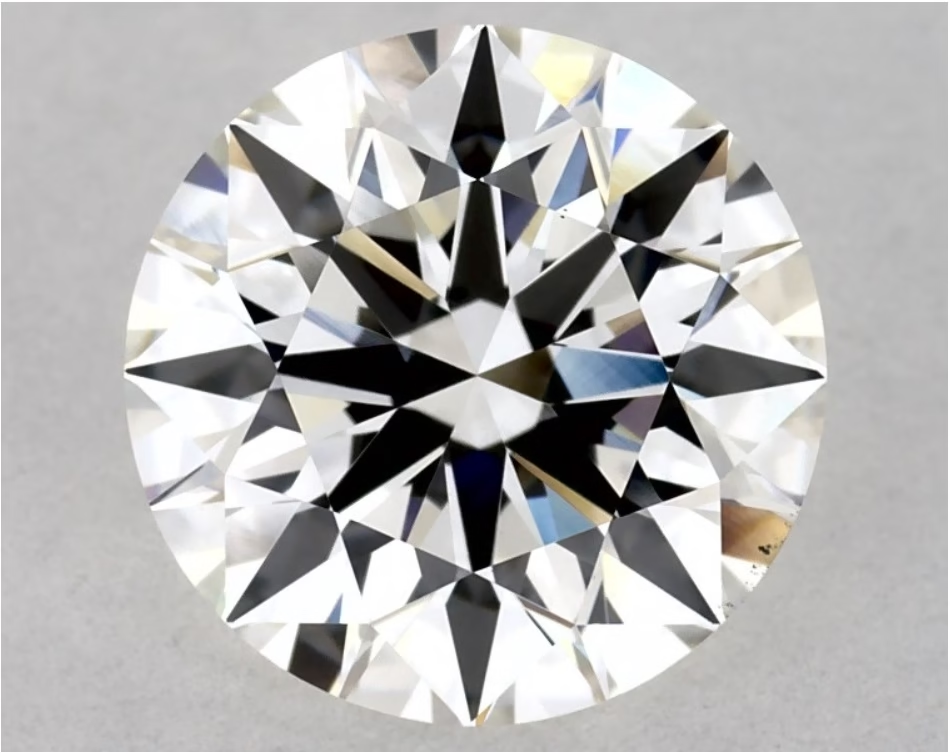
Diamond 1
- IGI 2.01 ct
- F color
- VS1 clarity
- Excellent cut
- $1,770
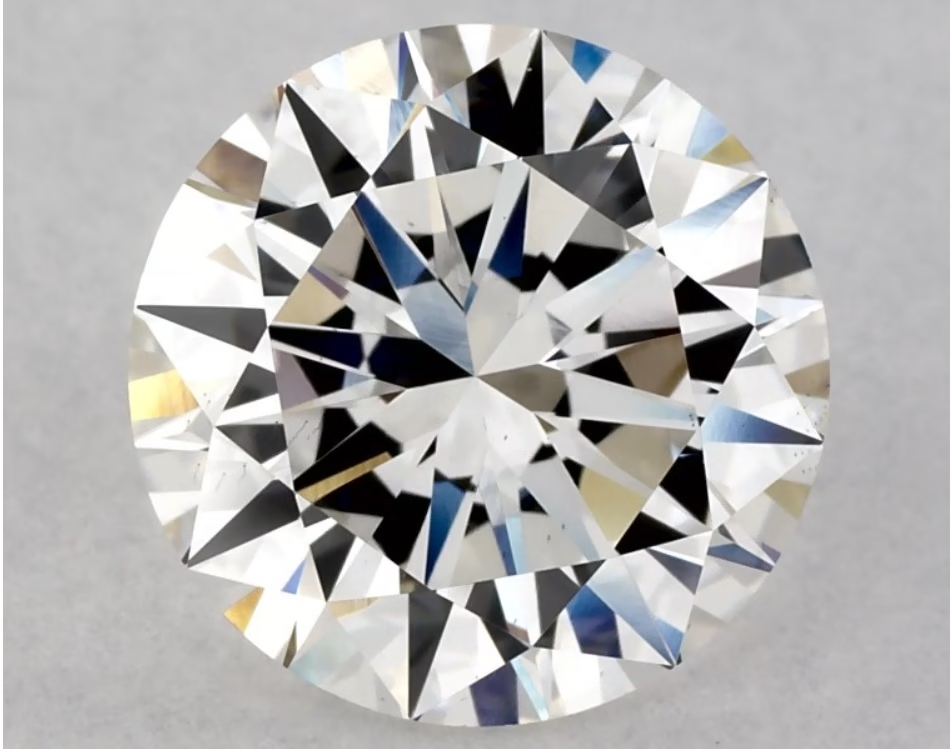
Diamond 2
- IGI 2.01 ct
- F color
- VS1 clarity
- Excellent cut
- $2,650
On paper, they look almost identical. Many buyers would assume the higher-priced stone must be better.
That is exactly where people overspend.
From the reports, Diamond 2 has a slightly larger face-up spread, but it also carries a much larger 63% table, which can weaken the crisp, balanced look many buyers want in a round brilliant. Diamond 1 faces up a touch smaller, but its 56% table is more attractive, and its face-up pattern appears cleaner and sharper in the image.
That matters more than most buyers realize.
The point is not that one certificate is wrong. The point is that certificates do not tell you everything about beauty.
In this example, Diamond 1 looks like the better deal because it delivers the same headline specs for $880 less, while also showing a more convincing visual pattern. Diamond 2 only makes sense if a buyer is willing to pay a large premium for a slight spread advantage.
That is the real lesson.
The question is not whether the grading report looks impressive. The question is whether the diamond looks bright, crisp, and lively when you actually inspect it.
This mistake can happen with any retailer. James Allen’s advantage is that its 360° viewing tools make it easier to catch before you buy.
Hidden Red Flags Specs Don’t Reveal
A grading report is useful, but it does not tell the whole story.
This is where many buyers get misled. Two lab-grown diamonds can share the same carat weight, color, clarity, and cut grade, yet still look noticeably different once you inspect them closely. The reason is simple: some of the biggest visual risks are not captured well enough by headline specs alone.
These are the red flags worth watching for.
1. Haze or milkiness
A diamond can look clean on paper and still appear slightly sleepy in real life if transparency is weak.
This is one of the most important things to catch in lab-grown diamonds. When haze is present, the stone can lose sharpness and life, even if the color and clarity grades look strong. Instead of looking crisp, it can seem soft or slightly foggy.
What to look for:
Check whether the facets look sharp and well-defined, or whether the diamond seems to have a faint film over it.
2. Gray or brown undertone
A diamond may be graded in a strong color range and still show an undertone that makes it less lively face-up.
This is especially important online, because undertone can make a diamond feel flatter or less bright than the certificate suggests. A stone can still be technically attractive while carrying a subtle cast that reduces the clean, lively look most buyers want.
What to look for:
Compare similar diamonds side by side. If one looks darker, duller, or slightly off in body tone, do not ignore it.
3. Inclusion placement
Clarity grade matters, but where the inclusion sits matters just as much.
A VS1 or VS2 diamond can still be less appealing if the inclusion sits under the table or interrupts the most visible part of the stone. By contrast, a diamond with inclusions placed off to the side may look much cleaner in normal viewing.
What to look for:
Focus on the center first. A small inclusion near the edge is often far less important than a darker mark in the middle.
4. Dead optics despite strong paper grades
This is one of the costliest mistakes buyers make.
A diamond can have impressive-looking specs and still fail where it counts most: visual life. If the patterning looks flat, the contrast is weak, or the stone does not show much brightness and snap, the certificate will not save it.
This is why “Excellent” or “Ideal” should never be treated as the end of the decision.
What to look for:
You want a diamond that looks bright, crisp, and lively — not just one that sounds impressive on the report.
A practical example
Take the two 2.01 ct F VS1 round lab-grown diamonds compared above.
On paper, they look almost the same. In practice, they do not present the same value. The lower-priced option appears to show a cleaner, more balanced face-up pattern, while the higher-priced option carries a much steeper premium without giving a clearly better visual result.
That is the trap.
The real risk is not buying a diamond with weak specs. The real risk is paying more for a diamond that does not actually look better.
What matters most
The safer approach is to treat the grading report as the starting point, not the conclusion.
Use the certificate to narrow the field. Then use magnified video to check for the problems that matter in real life: transparency, undertone, inclusion placement, and optical life.
That is where a better lab-grown diamond reveals itself.
How to Choose a James Allen Lab-Grown Diamond That Actually Looks Expensive
This is where most of the value gets won or lost.
A lab-grown diamond looks expensive when it appears bright, crisp, lively, and well-proportioned face-up. It does not look expensive simply because the certificate says D color, VVS clarity, or Excellent cut.
The smart move is to buy for visual performance first, then use the grading report to make sure you are paying a fair price for it.
Choose the shape based on risk
Not every shape gives the same margin for error.
Lowest-risk choice
Round brilliant is usually the safest option if you want strong sparkle and more consistent performance. It is the easiest shape to shop well online because it tends to hide small issues better and rewards strong cut precision.
Bigger-look shapes that need stricter screening
Oval, pear, and marquise can give you more spread for the money, but they are less forgiving. These shapes can show weaker light return, uneven performance, or bow-tie issues more easily, so video review matters even more.
Elegant shapes with less room for mistakes
Emerald and asscher cuts can look sophisticated and expensive, but they show clarity issues and transparency problems more easily. They demand a more careful eye.
Practical takeaway: If you want the safest path to a strong-looking lab-grown diamond, start with round.
Use eye-clean logic, not perfection logic
One of the easiest ways to overspend is to buy clarity that sounds impressive instead of clarity that looks clean.
For many round lab-grown diamonds:
- VS1 is often more than enough
- A large number of VS2 stones can also be perfectly fine visually
- VVS grades often cost more without giving a meaningful visible upgrade
That does not mean clarity is irrelevant. It means the grade alone is not the point. What matters is whether the inclusion is noticeable in the center or disruptive to the diamond’s overall look.
In the two-diamond comparison above, both stones carry the exact same headline clarity grade: VS1. Yet that does not automatically make them equal buys. Once you inspect them visually, price and presentation start to matter more than the label alone.
The safer approach: Buy the lowest clarity that still looks clean to the eye and stays visually quiet in the center.
Do not automatically chase D color
This is another common waste spend in lab-grown diamonds.
For most buyers, especially in white metals:
- F–G can look beautifully white
- E often feels premium without pushing too far into prestige pricing
- D is usually more about status on paper than visible improvement in real life
A well-cut F-color diamond with strong brightness and crisp optics will often look more impressive than a higher-color stone with weaker life.
That matters because buyers often pay for top color while overlooking the things that make a diamond actually stand out once worn.
The real question is not whether the report sounds elite.
It is whether the diamond looks bright and balanced in normal viewing.
Prioritize cut and optical life over paper flex
This is the biggest point on the page.
If a diamond does not look lively, nothing else can rescue it.
Cut precision, brightness pattern, contrast, facet definition, and overall face-up life matter more than chasing tiny upgrades in color or clarity. This is exactly why two diamonds with the same carat, color, clarity, and cut grade can still perform differently.
Example: the two 2.01 ct F VS1 round lab-grown diamonds
- Both are IGI certified
- Both are 2.01 ct
- Both are F color
- Both are VS1 clarity
- Both are graded Excellent cut
But they are not equally attractive as purchases.
The lower-priced stone at $1,770 appears to offer the stronger deal because it delivers a cleaner-looking value proposition without asking you to pay a large premium for a clearly superior visual result. Its face-up pattern appears more balanced and convincing for the price, while the more expensive option at $2,650 looks harder to justify based on the still-image view and proportion set alone.
That does not mean the cheaper stone is automatically perfect. It means the more expensive one has not clearly earned its premium.
That is how expensive mistakes happen: buyers assume matching specs mean matching beauty.
Check spread, not just carat weight
Carat weight tells you how much the diamond weighs. It does not fully tell you how large it looks.
Face-up millimeter spread matters because it affects size impression. A diamond carrying extra weight in depth can cost more without looking larger once set.
In the comparison here, the cheaper stone also has a slightly larger diameter spread, which strengthens its value case further. You are not just paying less. You are also getting strong face-up presence for the money.
The smart move: Always compare millimeter measurements, not just carat.
Let the video finish the decision
A grading report starts the process. The video finishes it.
Once you narrow the field by shape, size, color, clarity, and spread, the last step is visual confirmation:
- Does the stone look crisp?
- Does it stay bright?
- Is the center clean?
- Is there any haze?
- Does the contrast pattern look sharp and lively?
- Does anything about it feel off once it moves?
That is where James Allen becomes useful. The platform is strongest when you use it to avoid buying by certificate alone.
The real buying principle
The most common waste spend in lab-grown diamonds is paying for extreme color or clarity while accepting mediocre optics.
The better approach is simpler:
- choose a shape that matches your risk tolerance,
- buy for eye-clean value,
- avoid overpaying for prestige grades,
- compare millimeter spread,
- and let visual performance make the final decision.
That is how you buy a lab-grown diamond that actually looks expensive.
