

James Allen vs Blue Nile: Which Online Jeweler Is Better for Diamonds and Engagement Rings in 2026?
2026 Results: Which Should You Choose?
Based on inventory depth, inspection tools, buyer safeguards, and real-user confidence signals.
Whenever I’m asked whether James Allen or Blue Nile is the better place to buy a diamond online, I always give the same answer: James Allen is usually the safer choice — unless your priority is maximum natural diamond selection and showroom reassurance.
Here’s why: both retailers are legitimate. The real difference comes down to risk management—how much uncertainty you’re willing to accept when buying a high-value diamond sight-unseen.
WHAT MATTERS
Most “bad diamond” stories aren’t really about a bad diamond — they’re about someone buying blind and missing what truly matters:
AVOID THIS
This guide is built to help you avoid the three most common regret triggers:
If you’re still learning the basics, start with our step-by-step guide: How to Buy a Diamond Online.
Quick Verdict: James Allen vs Blue Nile
James Allen is usually the safer choice if you want to reduce “what did I just buy?” anxiety—especially in the most mistake-prone ranges: SI1/SI2 clarity and many lab-grown diamonds where transparency (haze/strain/undertone) matters. Blue Nile is better for maximum natural diamond selection and buyers who value showroom reassurance—provided you’re comfortable doing more of the interpretation yourself.
Choose James Allen if
Choose Blue Nile if
Bottom Line:
Buyer reality: Most regret comes from misjudging clarity and setting durability—not from choosing an illegitimate retailer.

Editorial Standards & Affiliate Disclosure: This site may earn a commission through affiliate partnerships with both James Allen and Blue Nile. That commercial relationship does not influence rankings or conclusions. Recommendations are based on consistent evaluation criteria, verified retailer policy terms, and observable diamond performance risk factors. When two options are close, the tie-breaker is the consumer outcome most likely to reduce regret: eye-clean appearance, long-term wearability, and upgrade economics—not payout. (For general guidance on disclosures, see the FTC Endorsement Guides.)
How This Comparison Was Evaluated
“Hands-on” is meaningless unless you can picture what was actually reviewed—so here’s the proof, not vibes. This comparison is based on direct review of real-world listings across both retailers, with extra focus on the ranges where buyer regret is most common.
Bias control: The same evaluation framework is used regardless of affiliate relationship. If either retailer materially improves (or worsens) in imaging consistency, upgrade constraints, setting quality control, or return friction, the verdict changes.
Authority note: When I reference diamond fundamentals (cut, clarity, and how grading works), I default to primary education sources like GIA Diamond and the GIA 4Cs.
Now that you know the headline difference, here’s the simplest way to decide based on your buyer profile, diamond type, and long-term priorities. If you’re choosing a shape first (oval vs round vs cushion), use our visual guide here: Diamond Shapes.
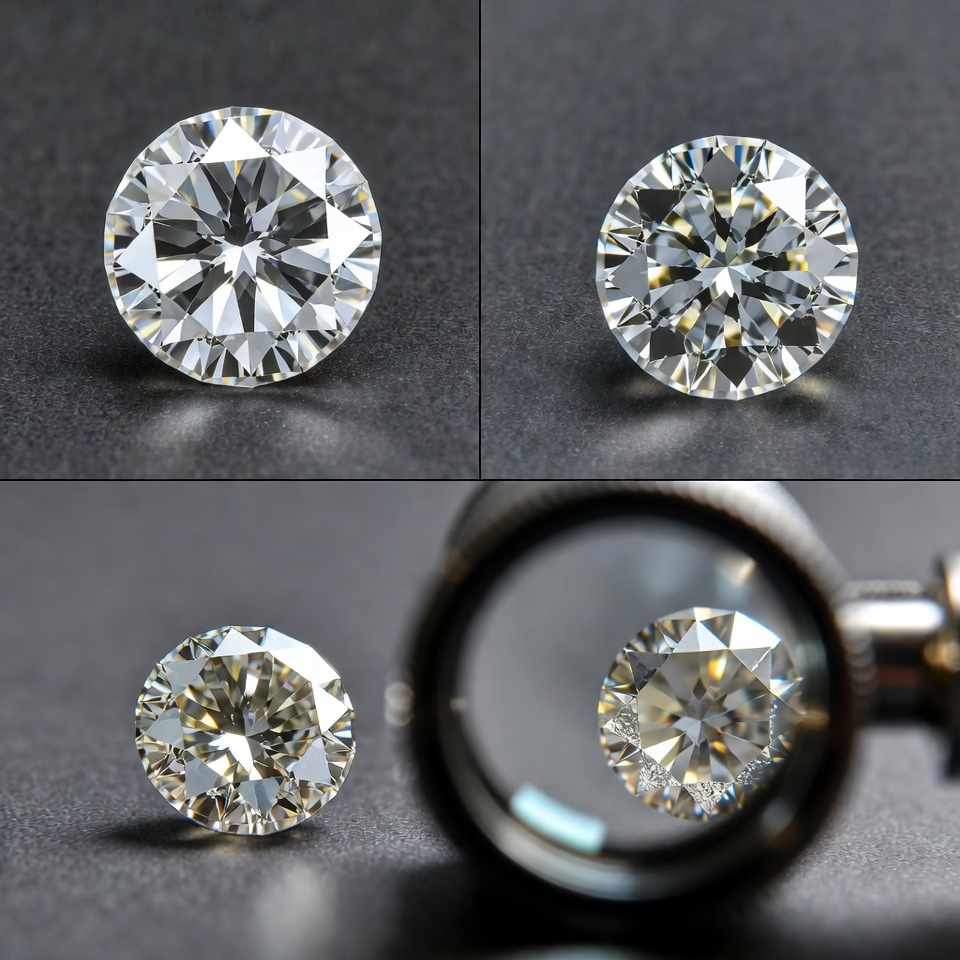
Jeweler’s shortcut: If you’re buying in SI clarity or lab-grown, choose the retailer that makes it easiest to verify what you’ll get—before emotions and deadlines take over.
Best Choice by Buyer Type
This table is the “buyer-match” view—because the best retailer isn’t universal. It’s the one that reduces your specific regret risk.
| Buyer Priority | Better Choice |
|---|---|
|
Best diamond inspection
|
James Allen |
|
SI clarity buyers
|
James Allen |
|
Upgrade-focused buyers
|
James Allen |
|
Large natural diamond selection
|
Blue Nile |
|
Showroom access & brand familiarity
|
Blue Nile |
|
Risk-averse first-time buyers
|
James Allen |
Which Is Better for First-Time Buyers: James Allen or Blue Nile?
For most first-time buyers, James Allen is the safer default — not because Blue Nile is untrustworthy, but because beginners are more likely to make predictable mistakes: buying by certificate grades, underestimating inclusion visibility, and choosing fragile settings under deadline pressure.
First-time buyers usually need one thing: fewer ways to be wrong. James Allen’s advantage is that the experience is more likely to push you toward verification instead of assumptions.
Choose James Allen first if you’re new and any of these are true:
Choose Blue Nile first if you’re new but you’re buying conservatively:
The simplest first-time buyer rule:
Pick the retailer that makes it easiest to confirm what you’re buying before emotions take over —
then use return timing like a professional (inspect early, don’t wait until day 28 to verify).
James Allen vs Blue Nile: Lab-Grown vs Natural Diamonds (At a Glance)
Diamond type changes the risk profile. Lab-grown adds transparency variables (haze/strain/undertone). Natural adds selection breadth and “finding the one” hunting.
| Diamond Type | Better Choice | Why |
|---|---|---|
| Lab-grown diamonds | James Allen | Inspection reduces haze/transparency risk |
| Natural diamonds (upgrade-focused) | James Allen | Clear lifetime upgrade policy |
| Natural diamonds (selection-first) | Blue Nile | Broader inventory access |
If you’re buying lab-grown specifically, start here: James Allen lab-grown diamonds and Blue Nile lab-grown diamonds.
James Allen vs Blue Nile Lab-Grown Diamonds (What Changes + What to Verify)
Lab-grown diamonds change the risk profile. Not because they’re “less real,” but because the report doesn’t always reveal the issue that ruins the look at delivery: transparency problems like haze, strain, or a subtle undertone that makes the stone read grayish in normal lighting.
That’s why this comparison usually favors James Allen for lab-grown: it’s not about price alone — it’s about how reliably you can verify appearance before you buy.
Why lab-grown is more inspection-dependent than natural
James Allen’s lab advantage is workflow, not marketing
Where Blue Nile can still work well for lab-grown
Blue Nile can be a strong option if you already know how to filter aggressively and you’re willing to treat the video as a pass/fail gate — not a nice-to-have. If you can’t confidently say “this looks crisp and transparent,” assume it won’t improve in real life.
Buyer-safe takeaway:
For lab-grown, you’re not hunting “the best certificate.” You’re hunting the cleanest visual performance.
Quick Comparison Between James Allen and Blue Nile
Use this table like a checklist. Then read the sections below where the “why” becomes actionable (what to look for, what to avoid, and where people overpay).
| Category | James Allen | Blue Nile |
|---|---|---|
| Diamond inspection | 360° HD diamond viewing is a core differentiator; marketed with high magnification tooling | 360° viewing exists on many listings, but the experience varies by listing and isn’t always as inspection-led |
| Returns | 30 days (unworn/original condition); free returns with limitations | 30 days from shipment date (unworn/original condition); exclusions for personalized/special orders/engraved/clearance |
| Warranty | Limited lifetime warranty + maintenance services (e.g., prong tightening/cleaning; rhodium services) | Limited lifetime warranty ; includes complimentary cleaning/inspection/prong tightening; exclusions apply |
| Resizing | 1 free resize in first year (first resize shipping language varies by region) | Complimentary resizing in first year within sizing range; fees may apply after |
| Upgrade Policy | Lifetime upgrade on loose diamonds: 100% credit, minimum 2× value | lifetime upgrade program: 100% credit, minimum 2× price; eligibility constraints; upgrades not eligible for discounts/coupons/price match |
| Showrooms | Primarily online | Physical store/showroom network |
James Allen vs Blue Nile Upgrade Policy (The Rules + The Hidden Constraints)
Most buyers think upgrade policies are irrelevant until they’re ready to upgrade — and that’s exactly why they overpay upfront. A good upgrade program lets you buy a smart “starter” diamond now and trade up later without feeling punished.
At a high level, both James Allen and Blue Nile advertise a similar headline: 100% credit toward an upgrade when you spend at least 2× the original diamond price. The difference shows up in the friction layer — the eligibility details and how discounts interact with upgrades.
James Allen: simpler, more strategy-friendly
James Allen’s upgrade structure is usually easier to treat as a real long-term plan. If upgrading is part of your life plan (anniversary, first home, future income growth), you want policies that feel predictable and hard to accidentally disqualify yourself from.
Blue Nile: upgrade exists, but can be easier to “mess up”
Translation: Blue Nile can still be fine — but you want fewer moving parts if you’re relying on upgrade value later.
How to use an upgrade policy correctly (the buyer-safe way)
Bottom line:
If upgrading is likely, prioritize the retailer whose upgrade terms are easiest to keep intact under real-world buying behavior (sales, promos, changing plans).
Buyer Confidence Snapshot
Quick proof signals that help you decide fast — then choose based on your priority: inspection vs selection.
| Proof | James Allen | Blue Nile |
|---|---|---|
| Trustpilot (5★ verified) | ★★★★★ 1,272 / 1,701 | ★★★★★ 879 / 1,373 |
| Google Reviews (5★) | ★★★★★ 5,993 / 6,734 | ★★★★★ 1,290 / 1,518 |
| Total 5★ signals (Trustpilot + Google) |
★★★★★
7,265
total 5★
Most buyers pick this when they want inspection confidence.
|
★★★★★
2,169
total 5★
Strong choice when you prioritize inventory breadth.
|
| BBB status |
 A+ • Accredited
|
A+ • Accredited
|
The Real Difference: Their Business Models Shape Your Risk
If you remember one thing from this comparison, make it this: the business model determines what you can verify and how much the platform helps you avoid common mistakes. Online diamond buying isn’t hard—but it punishes guessing.
James Allen’s Real Advantage: Not Access—But Guidance
The difference between James Allen and Blue Nile is no longer “does it have video?”—it’s how the buying experience teaches you to use it before you hit checkout. Good imaging without guidance still leads to the same outcome: you buy based on grades, then react emotionally when you see the stone in real light.
James Allen still differentiates through:
A 20-second “verification loop”:
Step 1: Find the inclusion at max zoom (pause + rotate).
Step 2: Zoom out to “real-life size” and rotate again.
Step 3: If you can still “track it,” treat it as visible risk.

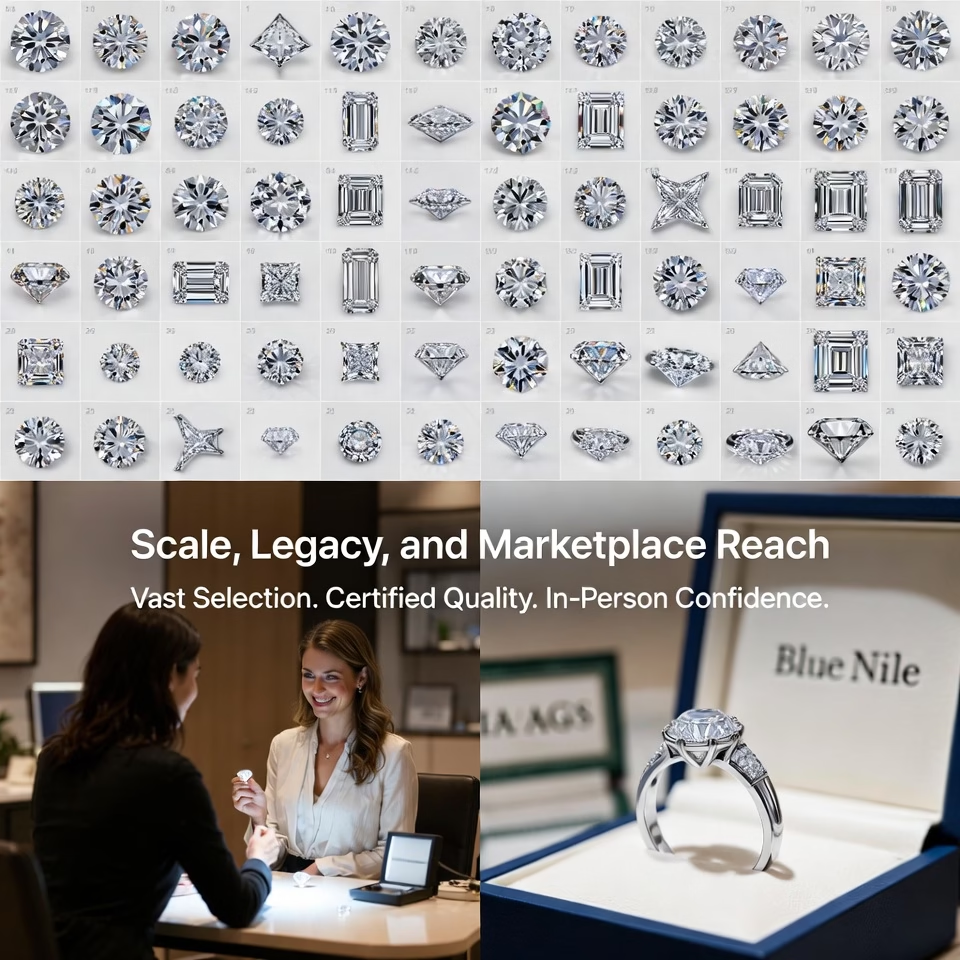
Blue Nile: Scale, Legacy, and Marketplace Reach
Blue Nile pioneered online diamond retail and built its brand on massive supplier access and operational scale. It offers thousands of diamonds across price points and shapes, plus physical showrooms for offline reassurance. That’s a real advantage if you’re hunting a specific combination—size, shape, color, budget—especially in natural diamonds.
The trade-off is consistency: a marketplace-style model can mean variation in imaging quality and a more certificate-led experience. That doesn’t make Blue Nile “worse.” It simply means your outcomes depend more on your filtering discipline.
Blue Nile’s Inventory Model: Where Scale Becomes a Risk
Blue Nile operates as a large virtual marketplace, aggregating inventory from many suppliers. The benefit is scale: buyers gain access to a huge range of diamonds across sizes, shapes, and price points. The trade-off is not simply “video availability,” but how consistently that visual data can be used for real buying decisions.
This model works well for higher-clarity natural diamonds. Risk increases for SI clarity and many lab-grown diamonds, where interpretation—not access—is the limiting factor.
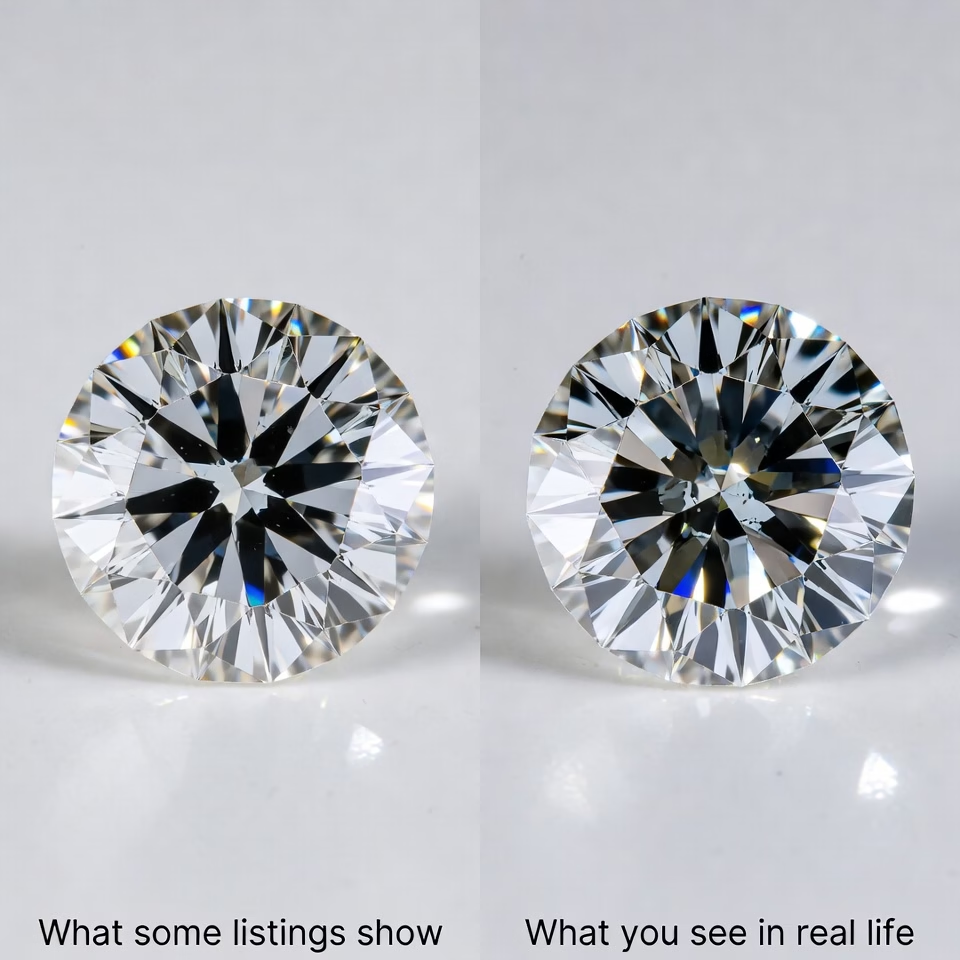
If you can’t confidently identify the inclusion under the table at normal viewing speed, assume it will be more noticeable in real life—not less.
Clarity Risk Breakdown: SI1 / SI2 Is Where Interpretation Matters Most
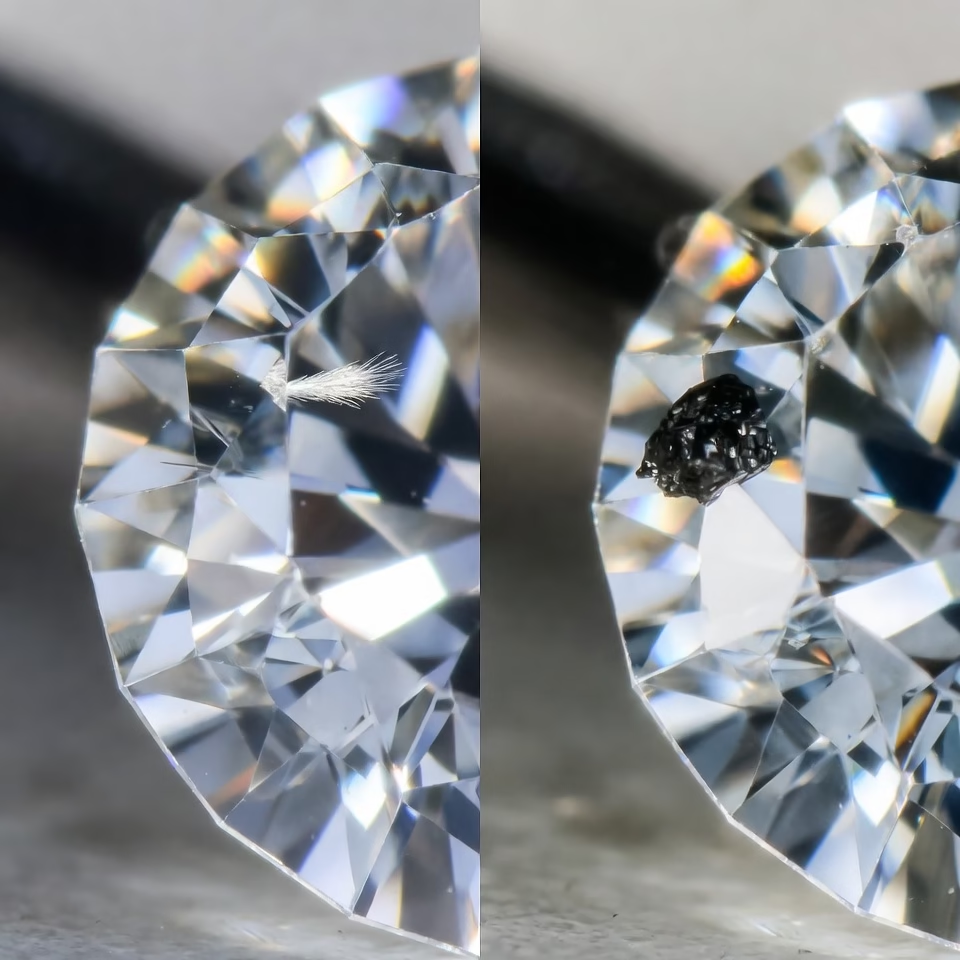
This is still the single most important practical difference between James Allen and Blue Nile. “SI1” is not a look—it’s a range. Two SI1 diamonds can behave completely differently depending on inclusion type, color, and placement.
SI1 feather vs SI1 black crystal (real-world impact)
If you’re shopping SI clarity, don’t “shop the grade.” Shop the inclusion behavior. Use our retailer deep-dives: James Allen and Blue Nile.
Blue Nile vs James Allen Pricing (What Actually Drives Price Differences)
If you’re comparing Blue Nile vs James Allen pricing, you’ll notice something confusing: sometimes Blue Nile looks cheaper for similar specs, and sometimes James Allen does — especially in lab-grown.
That’s not a contradiction. It’s how online diamond pricing behaves when two sites have different incentives and different “risk filters.”
Why Blue Nile can look cheaper on paper
Why James Allen can be “more expensive” but still lower risk
The pricing mistake that causes regret:
Buying the cheapest diamond that matches your filters without treating video/visuals as the final authority.
A buyer-safe way to think about price:
The real “price” is what you pay after you account for return friction, time pressure, emotional stress,
and the chance you need to exchange because the diamond doesn’t look the way you expected.
In diamonds, the only bargain is the stone you don’t feel compelled to replace.
Pricing: What the “Real” Difference Looks Like (JA vs BN)
To get a real taste of how pricing differences look on James Allen and Blue Nile, I built a simple “average buyer” filter for natural and lab-grown and compared the cheapest close matches each site surfaced. This doesn’t prove one retailer is always cheaper — it depends on what you’re optimizing for (spread, clean video, upgrade safety, etc.).
What these filters protect you from
What this doesn’t guarantee
Natural Diamonds Benchmark (Round 1.00ct, GIA)
| Benchmark | James Allen (Cheapest Match) | Blue Nile (Cheapest Match) |
|---|---|---|
| Matches found (same strict filters) | 2 | 6 |
| Cheapest listing price | $5,000 | $4,260 |
| Cheapest $ / carat (1.00 ct) | $5,000 / ct | $4,260 / ct |
| Report check (quick risk scan) | ||
| Video zoom impression (what your eyes see) | ||
| Who “wins” this benchmark? | — | Blue Nile (cheaper and cleaner in zoom in this sample) |
Bridge: Natural and lab-grown behave differently — natural pricing swings more with inventory mix, while lab pricing often overlaps. Either way, video is where risk divergence shows up fast.
Lab-Grown Diamonds Benchmark (Round 1.50ct, IGI)
Lab sticker prices can look close — the real difference is what you can verify on video. With lab-grown, the report won’t always make transparency/strain/undertone obvious.
What the lab filters protect you from
What it still doesn’t guarantee
| Benchmark | James Allen (Example match) | Blue Nile (Example match) |
|---|---|---|
| Example stone used | $1,450 — 1.50 E VS2 • IGI • Ideal | $1,690 — 1.50 E VS2 • IGI • Ideal |
| $ / carat (1.50 ct) | $967 / ct | $1,127 / ct |
| “Cut recipe” on report | 56 / 61.5 • ~34.9° / 40.8° | 58 / 60.0 • ~33.5° / 40.7° |
| Video check: transparency / haze | ||
| Video zoom: inclusion visibility | ||
| Who “wins” this benchmark? | James Allen (~$240 cheaper and looked cleaner in zoom) | — |
Bottom line: the only “cheap” diamond is the one that stays cheap after delivery. Use strict filters to keep the comparison fair — then let video decide which stone is actually cheaper for your risk profile (eye-clean, no haze, no surprise inclusions).
James Allen vs Blue Nile Engagement Rings (Settings + Build Quality)
If you’re comparing James Allen vs Blue Nile engagement rings, the diamond gets all the attention — but the setting is what determines whether the ring stays “easy to love” in year 3.
Here’s the practical reality: most long-term disappointment comes from maintenance friction (loose prongs, pavé bead wear, resizing limitations), not from the diamond suddenly being “worse.” Diamonds don’t wear out. Settings do.
The real difference isn’t style. It’s consistency. Both retailers offer attractive catalogs. The question is whether the catalog is paired with predictable construction and QC.
James Allen tends to win for “fewer surprises.”
Blue Nile tends to win for selection — with more variance.
A simple durability rule that prevents regret:
If the ring will be worn daily, choose durability first, aesthetics second.
The prettiest design is not the best design if it forces constant maintenance.
Upgrade Policy: A Long-Term Economic Divider
Upgrade policies matter more than most buyers think—because they change how risky it feels to buy “good enough” today and improve later. If you expect to upgrade, you should choose the policy that protects you when that day comes.
- James Allen: Lifetime upgrade, 100% credit, minimum 2× value
- Blue Nile: Upgrade exists, but eligibility constraints can be tighter
Upgrade-focused buyers should start with James Allen: James Allen review. Selection-first buyers can begin with: Blue Nile review.
Tools, Education, and Trust Signals
Trust signals matter in high-value, emotionally loaded purchases. But the strongest trust signal isn’t a logo—it’s whether the platform helps you verify what you’re buying and understand trade-offs.
James Allen builds trust through:
Blue Nile builds trust through:
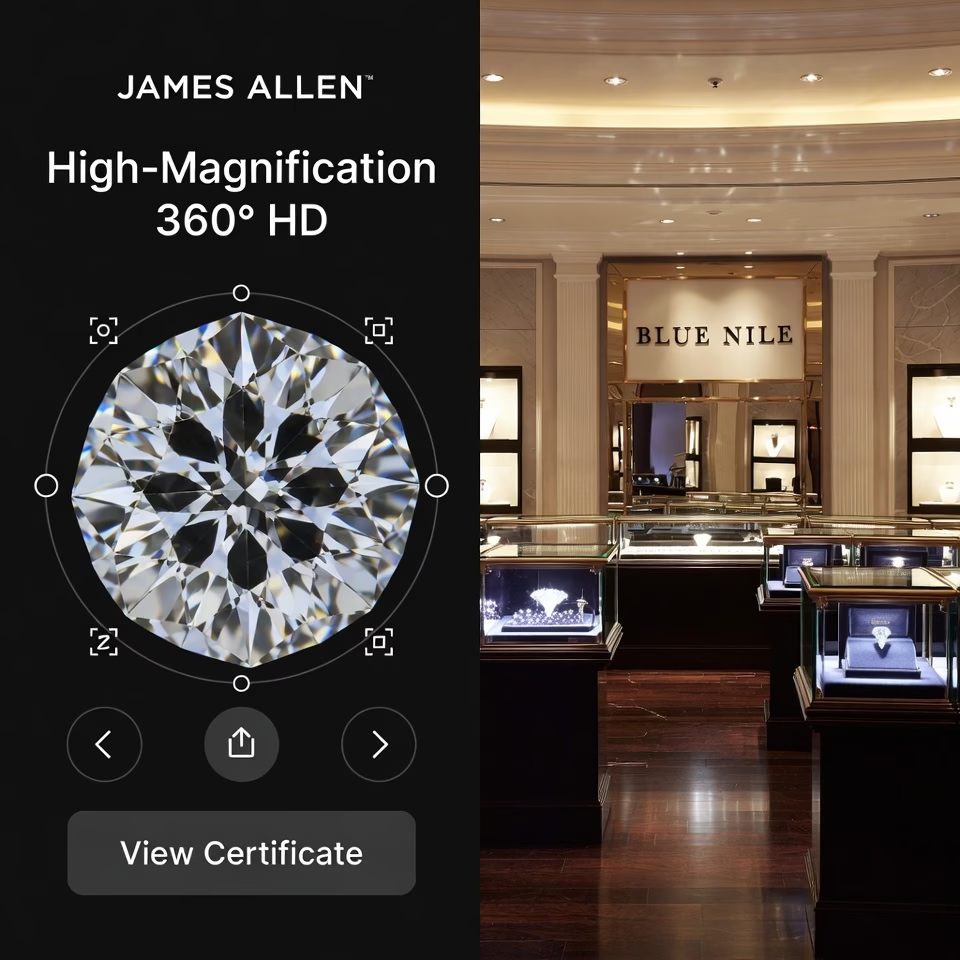
Verification vs familiarity—neither is inherently superior. The smarter move is choosing whichever reduces the risk you personally hate: “I might have missed something” vs “I can’t find what I want.”
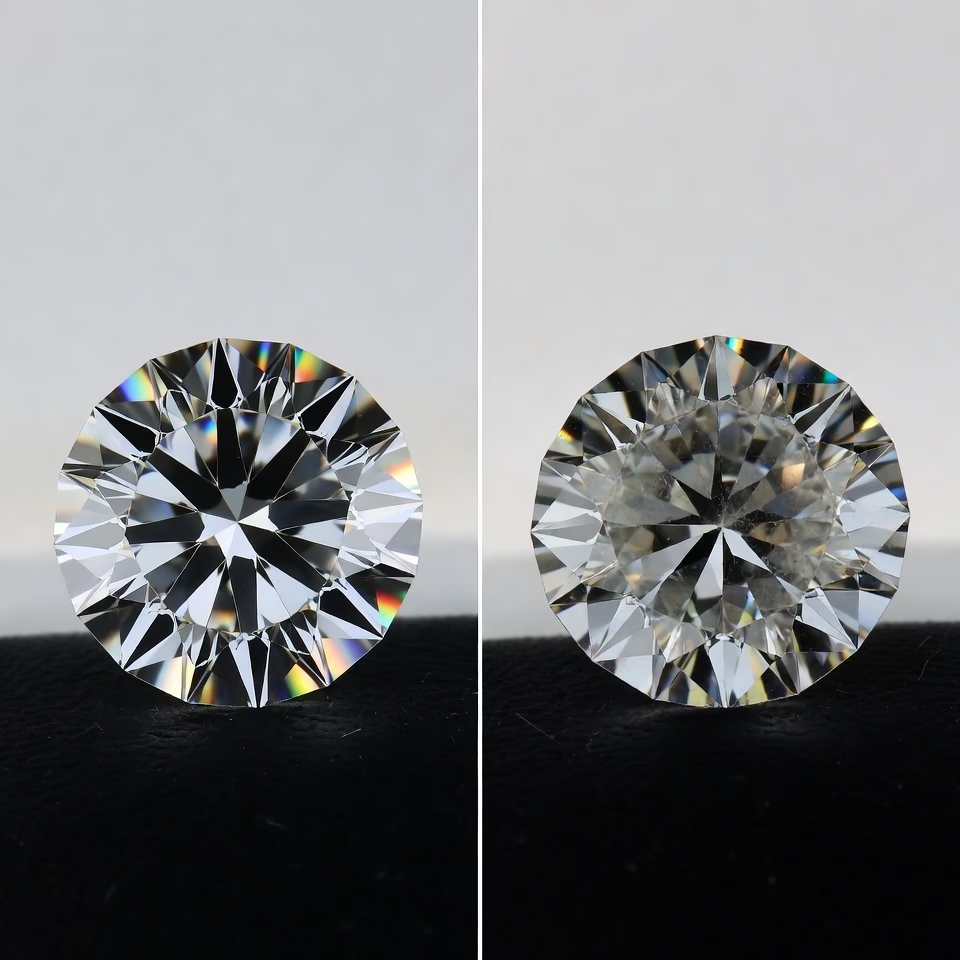
A Better Diamond Usually Means Cut
If you want a diamond that looks “more expensive” than it is, prioritize cut. Cut controls light return (sparkle), contrast patterning, and face-up life. Clarity and color matter—but cut is the multiplier. (For a primary-source primer, see GIA Diamond Cut.)
Regardless of retailer:
James Allen makes this easier because strong visuals help you read light performance cues. Blue Nile buyers should be more conservative and prioritize strong certificates + clean specs.
Red Flags Buyers Should Watch For (Both Retailers)
These red flags are responsible for most “I wish I had known” messages I get—regardless of where the diamond was bought.
For the safest “start to finish” path, use our full guide: How to Buy a Diamond Online in 2026.
FAQs: James Allen vs Blue Nile
Usually, yes—if your goal is to minimize “what did I just buy?” risk. James Allen tends to be the safer default because the shopping flow is more inspection-led (you’re pushed to judge the actual diamond’s visuals before relying on the grade label). That matters most in the ranges where outcomes vary wildly despite identical paperwork: SI clarity and many lab-grown stones (where haze/undertone can change the look at delivery).
Blue Nile can absolutely be the better pick when your priority is maximum natural diamond selection and you’re comfortable being more conservative (higher clarity, stricter cut filtering) to compensate for listing variability.
Because SI1/SI2 is a behavior range, not a look. The grade alone doesn’t tell you:
whether the inclusion is under the table (most visible) or near the edge (often hidden by prongs),
whether it’s white and low-contrast (often eye-clean) or black and high-contrast (often visible),
whether it’s a “spread-out” inclusion that reads hazy vs a small pinpoint.
In a marketplace-style catalog, the biggest risk is misreading the inclusion quickly and buying “on paper.” SI is where a single wrong assumption becomes daily regret.
Yes. Both sell legitimate diamonds and typically list stones graded by major labs (for naturals, often GIA; for lab-grown, commonly IGI/GCAL depending on the listing).
The real difference is not legitimacy—it’s how reliably you can predict what the diamond will look like at delivery (eye-cleanliness, transparency, performance cues).
James Allen in most cases. First-time buyers are most likely to:
over-trust the grade labels (SI1, “Excellent,” etc.),
underweight cut performance,
misjudge what “eye-clean” means in real lighting.
James Allen’s inspection-forward approach reduces the chance you learn those lessons after the box arrives.
Often yes for selection-first buyers—especially if you’re hunting a very specific mix of carat, shape, color, and budget and want lots of options.
But “better for natural” is conditional: if you’re buying natural in SI clarity or you’re not strict about cut filtering, the advantage of selection can turn into decision fatigue or a higher-clarity “safety purchase” that costs more than necessary.
Many listings on both sites have 360° viewing, but the practical question is consistency and usefulness:
Do you get enough magnification to judge inclusions confidently?
Is lighting consistent enough to see contrast and transparency?
Can you actually evaluate what matters fast (table inclusions, edge issues, bow-tie behavior in ovals)?
So: yes to “video exists,” but the shopping outcome depends on how well the visuals let you verify.
Shopping the grade instead of the inclusion. SI1 can be a great value or a daily-visible compromise. The winning approach:
identify inclusion type (feather vs crystal vs cloud),
identify placement (table vs edge),
judge contrast (white vs black),
imagine real-world lighting (office LEDs, daylight, spotlighting).
If you can’t confidently label the inclusion and explain why it’ll be eye-clean, assume it won’t be.
Showrooms can reduce anxiety, but they don’t automatically solve SI or lab-grown transparency risk. Safety comes from whether you can verify:
that the exact stone you’ll receive is eye-clean,
that it’s not hazy/milky (lab-grown),
and that performance cues (cut behavior) are strong.
A showroom helps if it lets you confirm those things. If it’s mainly reassurance without verification, it’s comfort—not risk control.
It’s the clearest example of why SI1 isn’t a consistent “look”:
Feather near the edge: often blends in and can be hidden by prongs once set; many are effectively eye-clean.
Black crystal under the table: high contrast and in the most visible zone; far more likely to be noticed daily.
Both can receive the same clarity grade. The difference is visibility behavior, not the label.
When you’re less confident in visual interpretation (or listing visuals vary), the common “risk hedge” is buying VS2 or higher so inclusions are less likely to be visible. That hedge can add a meaningful premium versus buying a well-chosen SI1 that’s genuinely eye-clean.
So the trade becomes: pay more for certainty (higher clarity) vs verify more (stronger inspection discipline).
Often, yes—because lab-grown has extra variables that can hurt real-world appearance even when the report looks great:
haze/milkiness (loss of crisp sparkle),
gray/blue undertone in some lighting,
strain-related texture,
“looks fine on paper” diamonds that appear sleepy at delivery.
If the platform makes it easier to spot transparency and contrast issues before checkout, it reduces the chance of disappointment.
A large marketplace-style inventory gives you choice, but introduces two practical risks:
Inconsistent presentation (visual depth/lighting can vary by source), making comparisons harder.
More burden on the buyer to interpret specs and visuals correctly—especially for SI clarity and lab-grown stones.
It’s great for shoppers who are methodical and conservative. It’s punishing for “quick decision” buyers.
Neither retailer automatically guarantees durability—design choices do. But in general:
If you want fewer long-term surprises, prioritize the retailer and setting line that’s most consistent about prong build, shank thickness, and pavé execution.
The biggest durability killers are ultra-thin bands, micro-pavé for daily wear, and minimal-prong looks without reinforcement.
If you’re active or hard on jewelry, choose a sturdier design even if it looks slightly less “dainty” on day one.
Yes—by nature. Pavé means many small stones held by tiny beads/prongs:
more frequent inspections,
higher risk of small stone loss over years,
more sensitivity to knocks and daily wear.
Pavé can still be a great choice if you plan for maintenance like you plan for ring insurance: normal, not a surprise.
They’re structurally similar in concept (lifetime upgrade, typically 100% credit, often requiring the new purchase to be at least 2×), but “better” depends on how upgradeable your purchase feels in practice:
James Allen tends to be the cleaner fit for buyers who deliberately plan an upgrade path and want an upgrade to function like a long-term strategy.
Blue Nile can work well too, but buyers often experience more “rule friction” (eligibility constraints and less flexibility around discounts/price-matching in upgrade scenarios).
If upgrading is central to your plan, choose the program that feels least conditional for your buying style.
Avoid Blue Nile if you:
are buying SI1/SI2 and can’t confidently interpret inclusion behavior,
are buying lab-grown and don’t want to risk haze/undertone surprises,
need a highly guided “tell me the safe choice” experience,
make fast emotional decisions under deadline pressure.
Blue Nile is better suited to buyers who can filter conservatively and stay disciplined.
You might overpay at James Allen if you:
buy higher clarity as a default (VS1/IF) when a well-chosen SI1 would look identical face-up,
over-prioritize brand comfort instead of cut performance,
pay for “top grades” without checking whether proportions and real visuals justify it,
choose premium settings/features you don’t actually need for durability.
The fix: treat the visuals as a tool to buy smart SI and strong cut—not as a reason to chase the highest paper stats.
The highest-regret buyer profile is:
deadline-driven (proposal looming),
purchases by certificate stats alone,
chooses SI clarity without verifying inclusion placement/contrast,
picks delicate pavé/ultra-thin settings for daily wear without expecting maintenance,
delays inspection/appraisal until the return window is almost over.
Regret usually isn’t about “wrong retailer.” It’s about misjudging what you couldn’t verify and choosing a setting that doesn’t match lifestyle.
Quick Shop Actions
Use these if you already know your priority: inspection confidence vs inventory breadth.