

James Allen Reviews (2026): Honest Quality, Pricing & Complaints Breakdown
An expert 2026 review of James Allen covering diamond quality, pricing, setting durability, buyer protections, and the complaint patterns that matter before you spend.
Should You Buy James Allen?
- Yes — if you want a controlled, online-first buying experience with strong visual comparison.
- No — if you prefer in-person guidance or highly bespoke craftsmanship.
James Allen Snapshot Verdict (2026)
A fast-read summary of where James Allen is strongest, where buyer risk actually shows up, and who is most likely to have a smooth purchase experience.
- Best known for: best-in-class diamond visualization, broad inventory, and a lower-pressure online buying flow.
- Main watch-outs: timeline pressure, resizing assumptions, and delicate pavé settings for active daily wear.
- Bottom line: James Allen remains one of the safer online diamond retailers for buyers who order with enough buffer and choose a setting that fits the wearer’s lifestyle.
Retailer Scorecard (2026)
| Dimension | Score | What it means for you |
|---|---|---|
| Diamond Visualization | ⭐⭐⭐⭐⭐ | Best-in-class inspection tools for comparing a diamond before purchase. |
| Setting Reliability | ⭐⭐⭐⭐☆ | Strong for mainstream daily-wear designs; less compelling for highly bespoke work. |
| Pricing Behavior | ⭐⭐⭐⭐☆ | Generally competitive, though not always the absolute lowest on every comparable stone. |
| Returns + Warranty Framing | ⭐⭐⭐⭐⭐ | A meaningful safety net when you confirm the relevant exceptions in advance. |
| Proposal Experience Fit | ⭐⭐⭐⭐☆ | Excellent for online-first buyers; less ideal for shoppers who need heavy in-person guidance. |
Best for
- Buyers who want control, comparison, and clarity without showroom pressure
- Shoppers who want to inspect many stones before committing
- Proposal planners who value predictable policies and a lower-pressure buying process
Not ideal for
- Buyers seeking atelier-level bespoke or hand-forged individuality
- Shoppers who need to try on many rings in person before deciding
- Buyers chasing the absolute lowest price regardless of trade-offs
- Shoppers who get stuck in large inventories without clear buying constraints
Trade-offs to know before you buy
A trustworthy review is not a list of positives. It is a map of trade-offs. James Allen is strong, but it is not the right fit for every buyer.
The most common friction is not quality — it is decision fatigue. Large inventories are useful when you have a plan. They become a trap when you do not. If you keep upgrading forever, you can lose weeks and still end up buying under pressure.
Fix: Set your constraints first — budget, shape, size range, color floor, and clarity floor — then compare within that lane. The goal is confidence, not infinite optimization.
How This Review Was Built — and Why You Can Trust It
This review is written as a decision tool, not a brochure. The scoring and conclusions are based on the factors most likely to affect real buyer outcomes: inspection confidence, setting durability, policy clarity, operational reliability, and the risks that tend to matter most after purchase.

What this review evaluates
- Diamond transparency tools — visualization quality, browsing efficiency, and comparison confidence
- Setting durability — prong architecture, band thickness, profile height, and pavé risk zones
- Pricing behavior — value positioning, promotion patterns, and fairness versus race-to-the-bottom pricing
- Buyer protections — returns, resizing caveats, warranty framing, and policy boundaries
- Operational trust signals — delivery predictability, support structure, and large-scale retail reliability
What keeps this review consumer-first
- No paid placements influencing the rankings or conclusions
- No brand-controlled conclusions — criticism is included where it prevents regret or avoidable cost
- Scheduled updates so the review does not drift away from current policies, complaint patterns, or buying conditions
- Methodology-led scoring tied to buyer risk, not showroom excitement or marketing language
Why this matters: Most poor online ring outcomes are not caused by fake diamonds. They happen because buyers assume policies, compress timelines, or choose a delicate design for a lifestyle that needs more structural security.
Third-Party Reputation Signals
No single review tells you enough. The better approach is to compare James Allen across major public review platforms, looking at both overall ratings and how much of the review base is strongly positive. That gives a more useful picture of scale, customer satisfaction, and consistency than star averages alone.
| Rating Signal | BBB | Google Reviews | Trustpilot |
|---|---|---|---|
| Accreditation / top-grade |
A+
BBB Accredited Business
View BBB source
|
5,571
Estimated 5-star reviews from 6,259 total (89%)
View Google source
|
1,270
Estimated 5-star reviews from 1,716 total (74%)
View Trustpilot source
|
| 5-star review share |
—
Not shown on the BBB review page
|
89%
Of all reviewers gave 5 stars
|
74%
Of all reviewers gave 5 stars
|
| Overall customer rating |
Average of 183 customer reviews
|
Based on 6,259 reviewers on
Google
Reviews
|
Based on 1,716 reviews
|
- The pattern matters more than the score: Reviews consistently point to strong product quality, even when service delays occur.
- Most complaints are timing-related, not quality-related, which lowers the risk of receiving a poor product.
- Established presence on Trustpilot and BBB signals real accountability, not a fly-by-night retailer.
Note: 5-star review counts for Google Reviews and Trustpilot are estimated from the percentages shown on each platform and rounded to the nearest whole review. The BBB review snapshot shows an average customer rating and total review count, but not a visible 5-star-share breakdown.
Is James Allen Good Quality?
If your core question is: “Am I about to spend thousands online and regret it?” — this is the section that matters most.
Yes — for the right buyer and the right build. In 2026, “good quality” is not about vague luxury language. It is about whether the ring holds up in real life, and whether the buying process helps you avoid preventable mistakes.
What “quality” means in engagement rings
A ring can impress on day one and still be a poor purchase if it becomes a maintenance problem later. Real quality rests on three things:
- Diamond legitimacy: proper certification plus the ability to inspect what you are actually buying
- Setting durability: structural choices that can stand up to daily wear
- Ownership experience: clear policies, resizing expectations, warranty boundaries, and reliable fulfillment
The quality reality (not marketing)
- Diamonds are generally listed with reputable grading documentation, which establishes a legitimacy baseline.
- The platform’s visualization tools materially reduce spec-sheet-only buying mistakes.
- Mainstream settings are suitable for daily wear, but durability still varies by style, thickness, and profile.
What good quality feels like after a year
Quality is not just sparkle. It is the quieter ownership details that still matter months later:
- Prongs still feel secure when checked gently with a fingernail
- The band does not feel flimsy or excessively delicate
- The ring does not snag constantly on clothing or hair
- Pavé, if chosen, does not become a recurring source of maintenance anxiety
- Any necessary resizing does not derail the engagement timeline
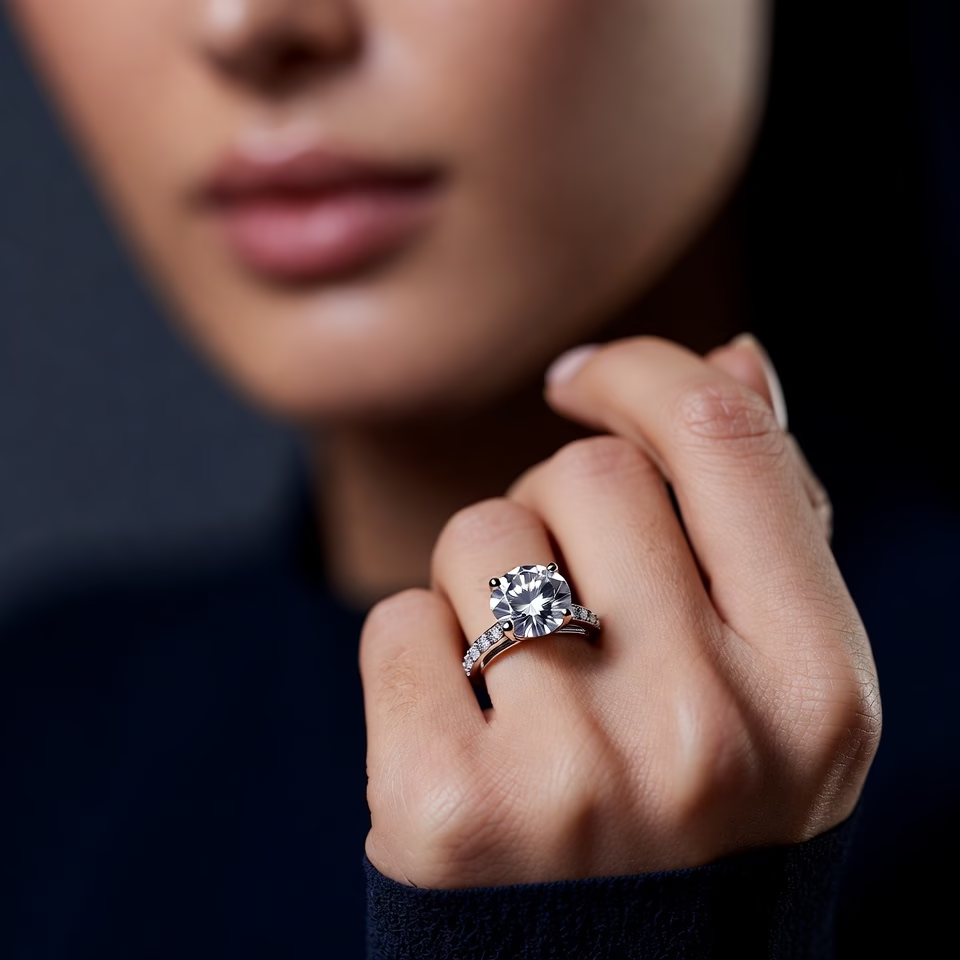
If you order with enough buffer and choose a structurally sensible setting — especially for an active wearer — James Allen is well positioned to deliver what most serious buyers want: a lower-stress, higher-confidence ownership experience.
James Allen Complaints 2026 – What Patterns Actually Show
This is where a review either earns trust or loses it. When people search for “James Allen complaints” or “James Allen negative reviews,” they are usually trying to answer one practical question:
“Are these issues random, or are they predictable?”
Here is the useful answer: no large online jeweler has zero complaints. The real distinction is whether the complaints point to a repeatable risk pattern or to scattered edge cases. In high-volume retail, even a relatively small failure rate creates visible public noise across Trustpilot, BBB customer reviews, Google Reviews, and discussion threads like this Reddit buyer discussion.
The complaint categories that repeat (and why)
Across review platforms and buyer forums, negative experiences tend to cluster into a small number of familiar categories — and most of them are not “fake diamond” complaints. They are usually about timing, expectations, or policy assumptions.
| Complaint type | Frequency pattern | Root cause | How to avoid / mitigate |
|---|---|---|---|
| Resizing delays / confusion | High | Peak backlog + eligibility exceptions; buyers assume resizing is automatic | Order early, confirm policy terms before checkout, and choose structurally safer settings where possible |
| Delivery timing stress | High | Proposal deadlines collide with production timelines + carrier variability | Build a time buffer and review the shipping policy before you set a proposal date |
| Pavé stone loosening | Medium | Micro-pavé density + active lifestyle + impact exposure | If the wearer is active, reduce micro-pavé, choose sturdier bands, and favor lower-profile designs |
| Customer service wait times | Medium | Volume spikes during peak seasons | Contact support before peak periods where possible, document what is promised, and do not plan around vague timeline updates |
| Expectation mismatch (“looks different”) | Low–Medium | Screen perception vs real-life scale; head height surprises | Inspect 360° visuals carefully, compare millimeter measurements, and choose a sensible profile height |
| Structural issues (rare but scary) | Low | Outliers + design-lifestyle mismatch | Choose conservative prong architecture and avoid ultra-thin builds for daily wear |
Source note: complaint patterns reviewed against Trustpilot, BBB review history, Google Reviews, selected forum discussion such as this Reddit thread, plus James Allen’s own terms and policies and shipping information.
What the complaint patterns actually mean
The easiest mistake is to read every negative review as if it is equally likely to happen to you. A better approach is to separate emotional intensity from repeatable patterns across review platforms and documented store policies.
What matters most for a ring buyer
If you are buying an engagement ring, you do not need perfection. You need a process that removes the most avoidable failure points. In practice, the complaint categories that matter most are:
- Deadline risk: delivery delays when you planned too tightly against the published shipping timeline
- Fit risk: resizing assumptions that clash with actual policy terms and exceptions
- Maintenance risk: micro-pavé chosen for an active lifestyle
Resizing: eligibility + timeline (the real buyer trap)
Resizing is one of the most common complaint triggers across large online jewelers — not because resizing itself is problematic, but because buyers assume every ring can be resized easily and quickly. In reality, eligibility depends on design: pavé density, metal type, and structural details can all affect what is allowed under the store terms and policy language.
The safer approach is simple: confirm eligibility before checkout, then assume resizing during peak periods may take longer than you would prefer. If your proposal is near a holiday or spring peak, review the published shipping timeline and build in more buffer than feels necessary.
James Allen Ring Durability (Long-Term Wear Reality)
Durability is where long-term ownership is won or lost. A diamond can be excellent, and the ring can still become a problem if the structure does not match the way it will actually be worn.
Durability rule: The ring does not need to survive extreme conditions — it needs to hold up to ordinary life: handbags, gym sessions, door handles, travel, winter gloves, and the occasional accidental knock.
The durability factors that matter most (2026 buyer reality)
- Prong architecture: how the center stone is actually secured, not just how the setting looks in photos
- Band thickness: thinner looks delicate, but it also tends to wear faster over time
- Head height: a higher profile increases snag risk and impact leverage
- Pavé density: more stones means more potential maintenance points
- Metal choice: 14k, 18k, and platinum each wear differently and affect long-term maintenance
Pavé vs solitaire: the honest trade-off
Pavé is not a poor choice. It is simply a higher-sparkle design with a higher maintenance profile. Each small stone is held by tiny beads or micro-prongs, which creates more possible failure points than a solitaire.
A solitaire is usually the safer durability choice because there are fewer stones, fewer delicate contact points, and fewer areas where everyday impact can create trouble. It gives up some surface sparkle, but it generally wins on simplicity, security, and ease of long-term maintenance.
If the wearer is careful with jewelry, pavé can still be an excellent daily-wear option. If the wearer is active, frequently travels, works with their hands, or tends to knock jewelry against hard surfaces, micro-pavé becomes a higher-risk design — not because James Allen cannot make it, but because the style itself is less forgiving.
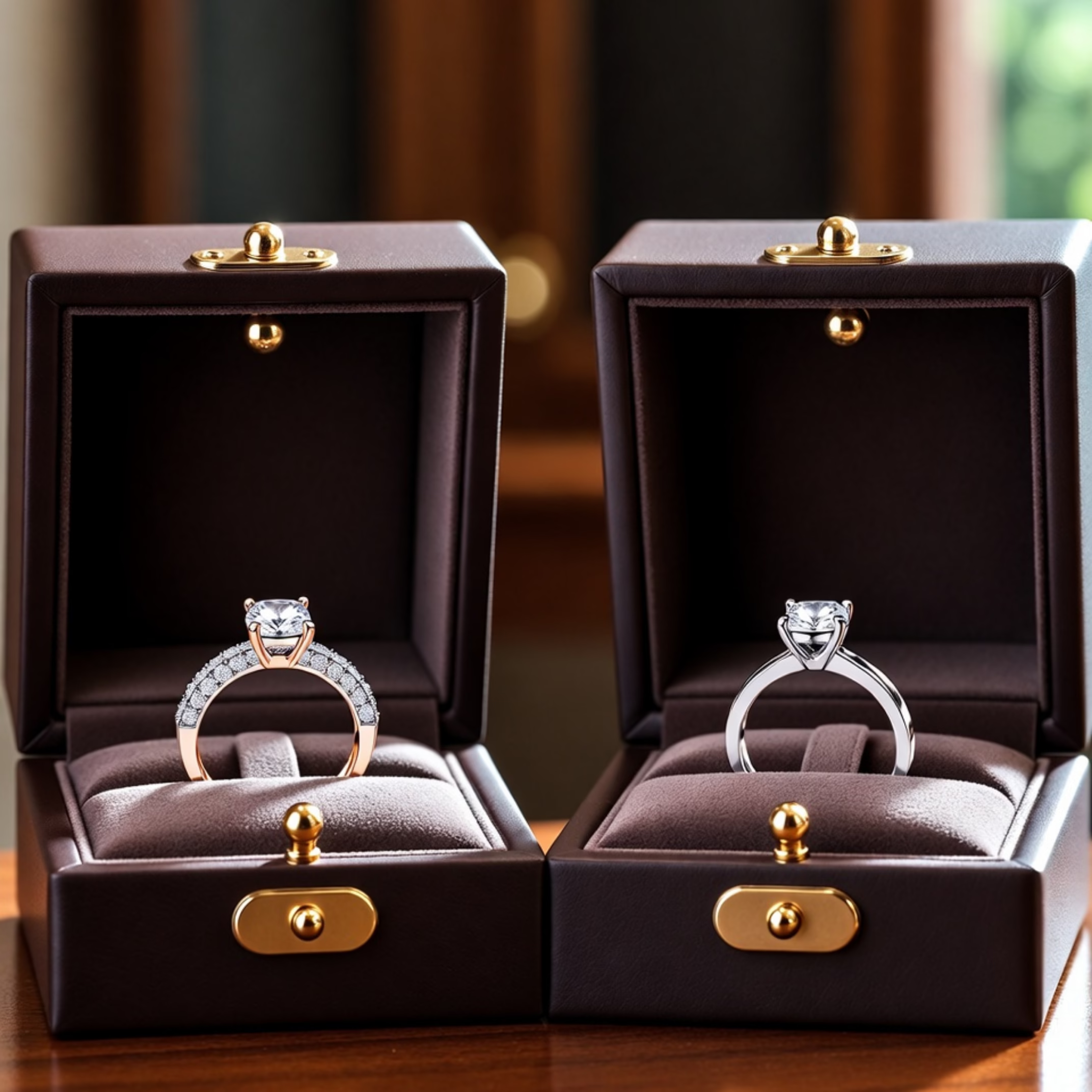
Simple rule: If the wearer is hard on jewelry, prioritize a solitaire, cathedral, bezel, or a sturdier pavé design with fewer stones and a thicker band.
Prong security: what buyers are really worried about
Searches like “James Allen prongs falling out” usually point to a more basic fear: “Will the stone still feel secure after a year of normal wear?” In practice, prong security depends on:
- Prong thickness and shape
- How high the head sits (higher means more leverage on impact)
- How often the ring catches on fabric, gloves, or hair
- Whether the ring is removed during rough activity
A conservative 4–6 prong solitaire with a sensible profile remains one of the most reliable long-term structures. Bezel settings can be even safer for active lifestyles.
Thin bands vs 1.8mm+: the line many buyers overlook
If you want a ring that still feels substantial after years of daily wear, the band matters. Ultra-thin bands can look elegant in photos, but they are also more likely to:
- Feel too slight, especially on larger finger sizes
- Warp slightly over time under daily stress
- Wear down faster at the bottom of the shank
- Increase the maintenance burden of pavé designs
Durability baseline: If the wearer is active, aim for a setting that is at least ~1.8mm+ in band thickness where possible, and avoid ultra-delicate micro-pavé builds.
Active lifestyle considerations (the real-world test)
Here is the practical way to think about it:
- If the wearer lifts or goes to the gym while wearing rings: prioritize low profile and reduced pavé.
- If the wearer works with their hands: prioritize snag resistance and structural simplicity.
- If the wearer travels often: prioritize easy maintenance and simple prong checks.
- If the wearer rarely removes jewelry: prioritize structural safety over ultra-delicate styling.
How common styles hold up long-term
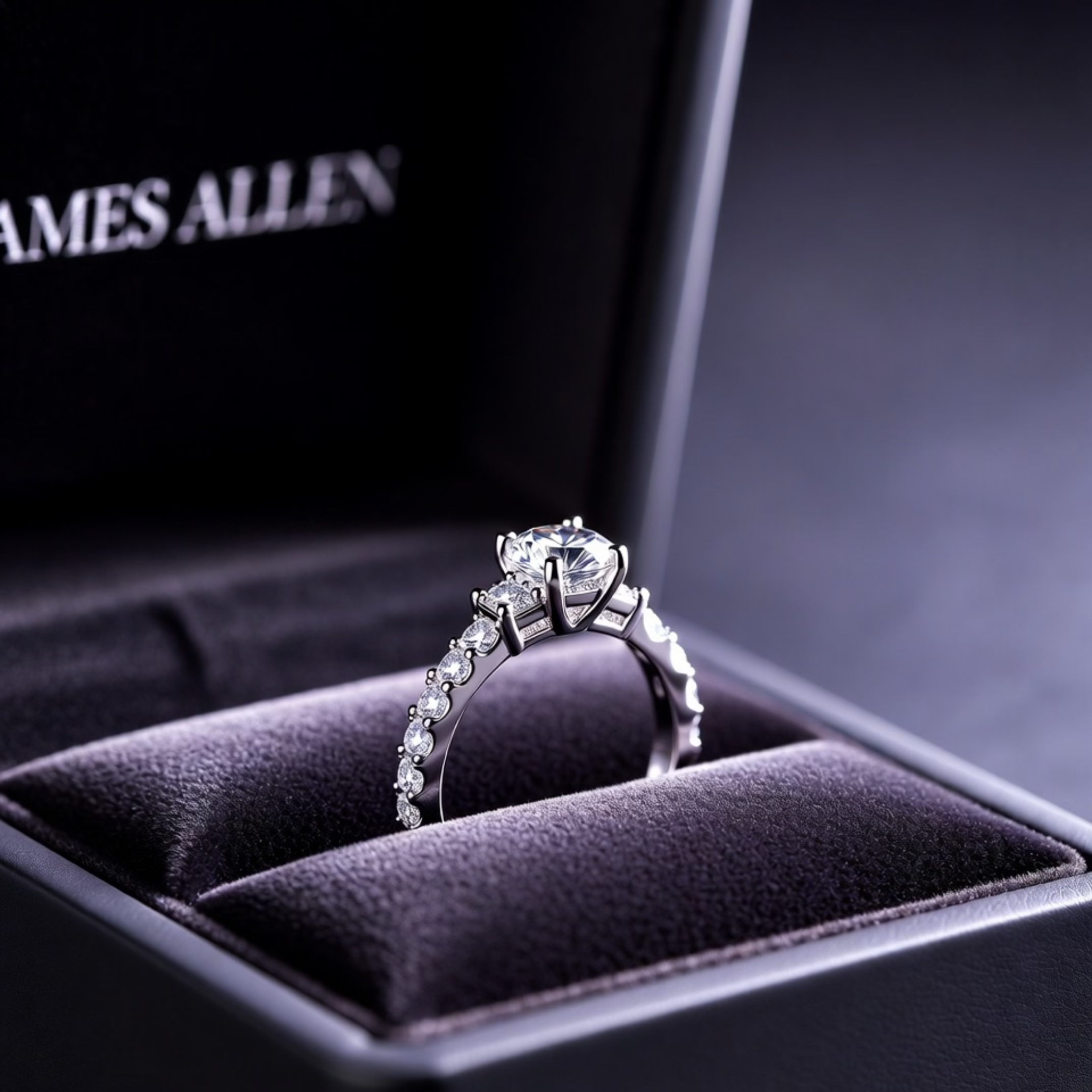
Cathedral settings
Pros: supportive structure, classic profile, tends to distribute stress well.
Watch-outs: a taller head can still increase snag risk.
Best for: timeless builds that balance elegance with security.
Pavé settings
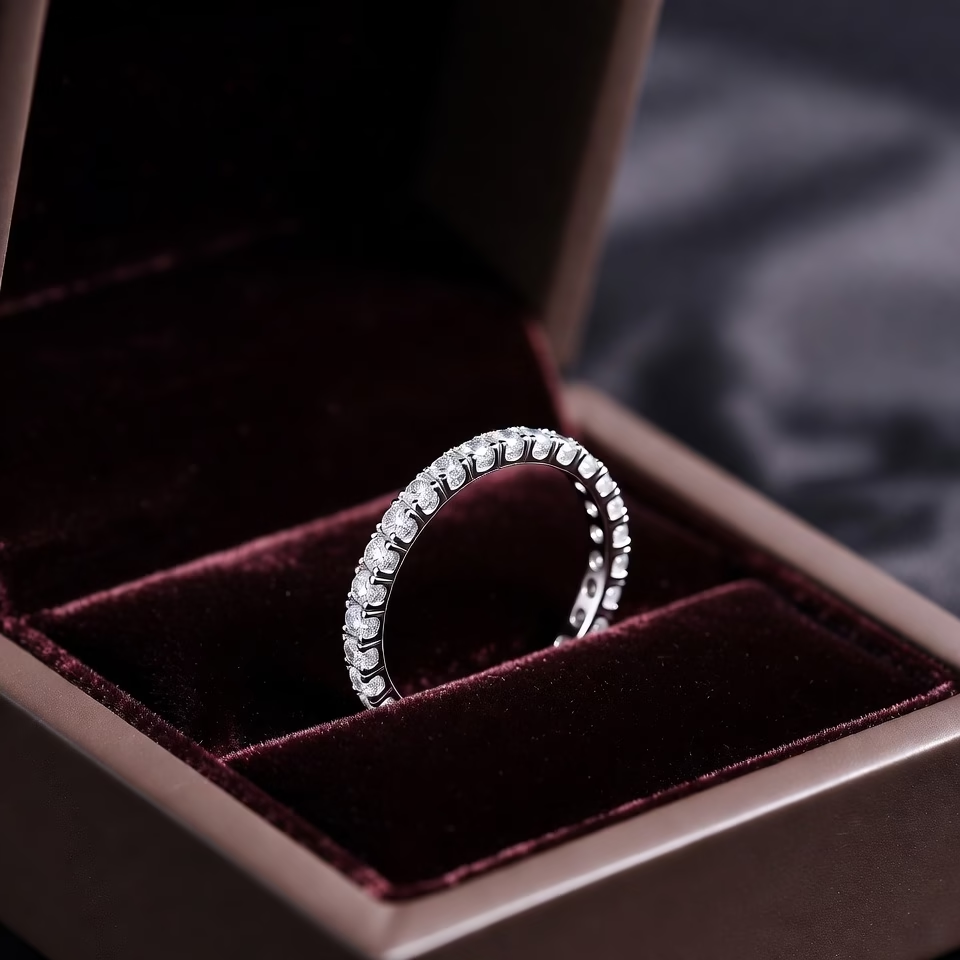
Pros: high sparkle and strong visual presence.
Watch-outs: higher maintenance probability, especially with micro-pavé on thin bands.
Best for: careful wearers who can remove the ring during rough activity.
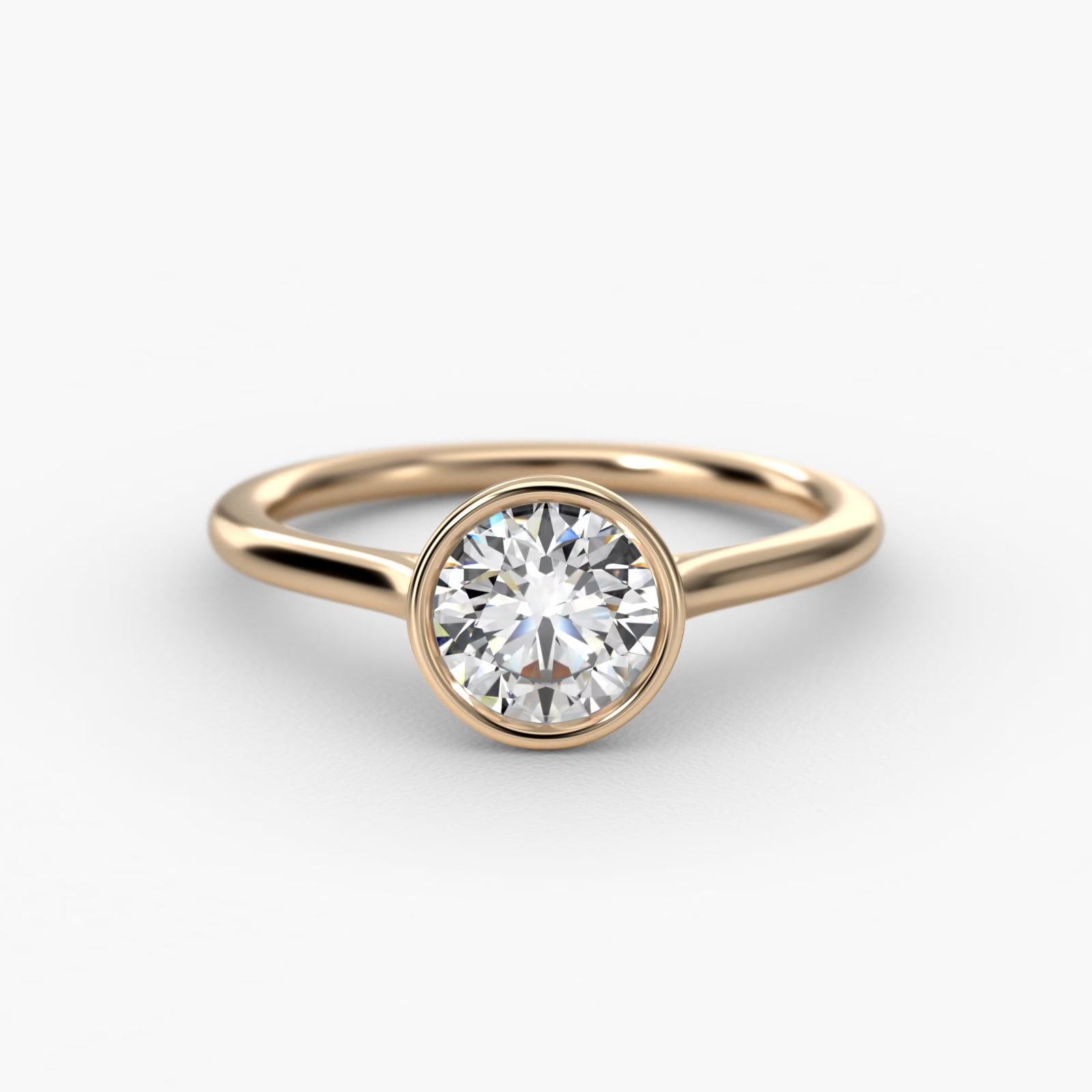
Bezel settings
Pros: secure, low-snag, and highly protective; excellent for active lifestyles.
Watch-outs: some buyers find the look less airy than prong-set designs.
Best for: durability-first buyers who want lower-maintenance wear.
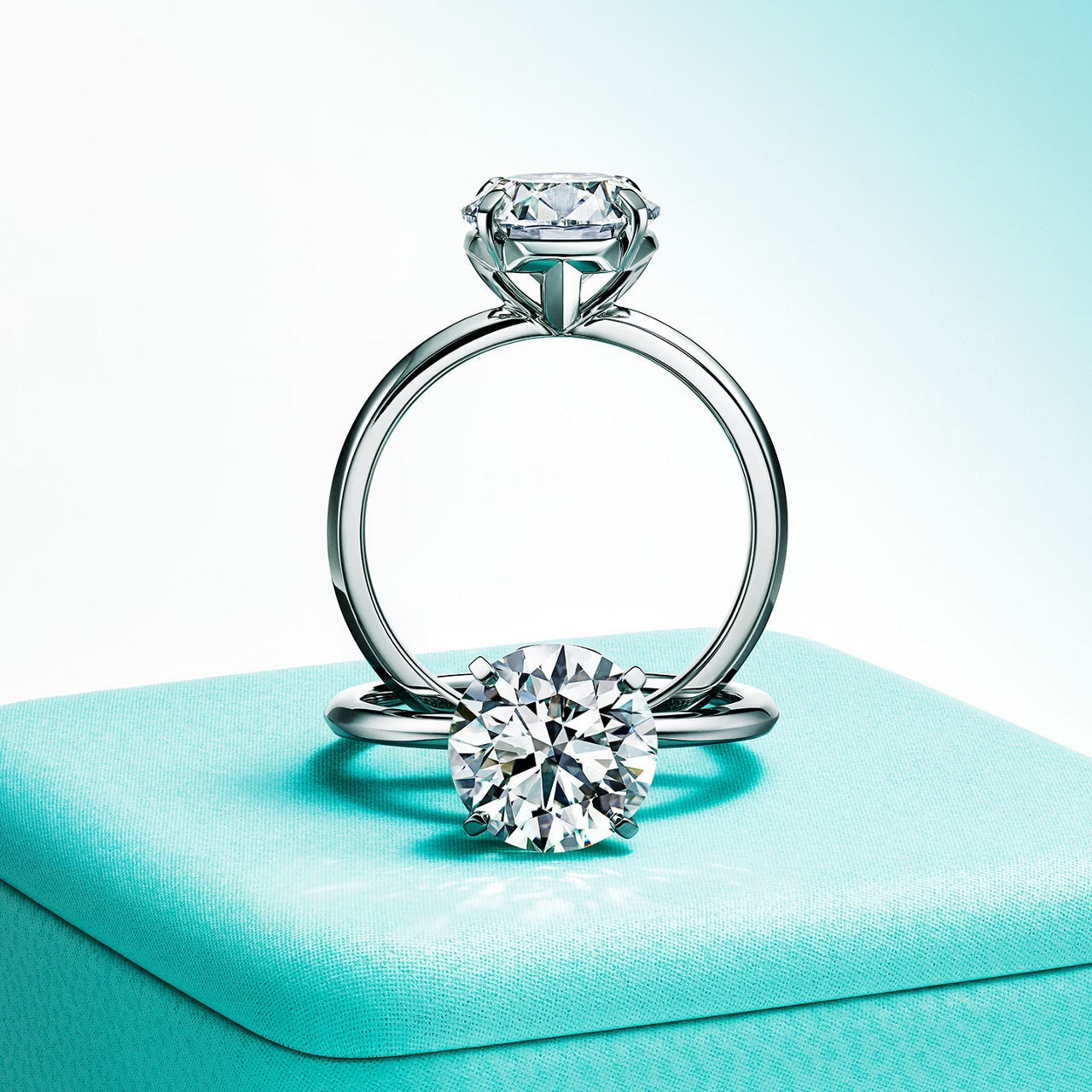
Tiffany-style solitaires (classic 4–6 prong)
Pros: timeless, easy to maintain, and structurally dependable.
Watch-outs: head height still matters — choose a sensible profile.
Best for: buyers who want the safest all-around long-term bet.
For the technical breakdown (prongs, pavé risk zones, thickness ranges), read the full James Allen Settings Quality & Durability Deep Dive →
James Allen Value, Returns & Buyer Protection (2026)
The real pricing question is not whether James Allen is the cheapest. It is whether the buying tools, policies, and overall experience justify the spend. In a high-ticket purchase, fair value comes from lower uncertainty before checkout and fewer problems after delivery.
Fair value, not “cheapest at any cost”
The smartest way to judge James Allen pricing is to stop asking “Is it the cheapest?” and start asking “Is this a fair price for the tools, transparency, and buying outcome I am getting?”
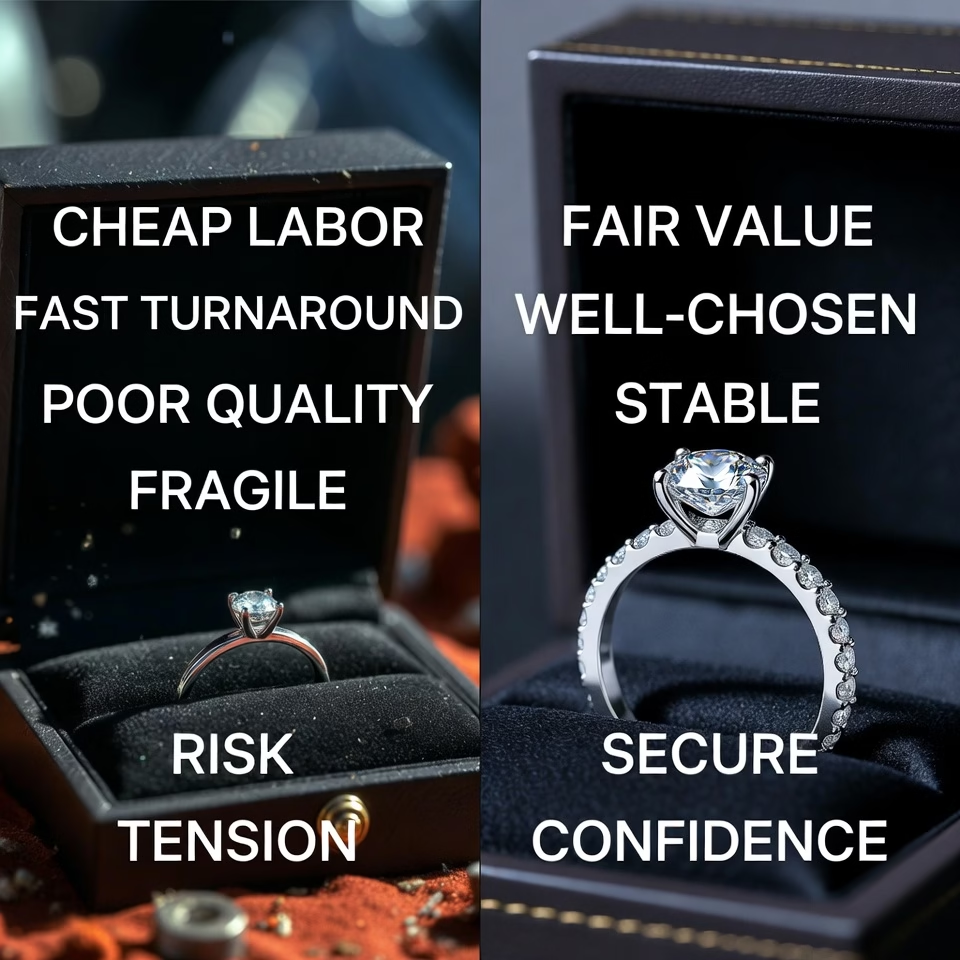
In engagement rings, the cheapest option can become the more expensive one if it increases your risk of a disappointing stone, a fragile setting, a sizing issue, or a proposal-timing problem.
For a more direct benchmark, see this real James Allen vs Blue Nile price comparison , where similar natural and lab-grown diamonds were compared across both retailers.
How James Allen typically prices
- Often stronger than many local jewelers because of lower showroom overhead and easier comparison
- Competitive with major online retailers across many common spec bands
- Not always the absolute lowest, because part of the price supports platform clarity and lower buying friction
What “fair value” looks like
Strong inspection tools
reduce buying mistakes and second-guessing.
Policy clarity
reduces sizing, return, and proposal risk.
Sensible design choices
reduce long-term maintenance stress.
High-ticket truth: The real win is not saving a little on paper. It is buying a ring that is visually strong, structurally sensible, and supported by policies you already understand.
Returns: what actually matters
- Confirm the return window and condition requirements
- Check exceptions for custom work, engraving, or special configurations
- Know how long refund processing may take after receipt
Resizing: where assumptions cause trouble
- Pavé density can reduce resize flexibility
- Delicate or complex designs can narrow what is realistically possible
- Metal type and seasonality can affect timing
Warranty, shipping & inspection
- Warranty usually covers workmanship defects, not normal wear or accidental damage
- Shipping security means a secure address and signature delivery
- Inspection on arrival should happen within 24–48 hours
Before you buy, confirm these 4 things
- Return eligibility and any exceptions for your configuration
- Resize eligibility for the exact setting selected
- Shipping + resize timing for when you plan to order
- An inspection plan for the first 24–48 hours after delivery
Timeline tip: Order at least 8+ weeks before the proposal. If resizing is likely or you are near peak season, aim for 10–12 weeks.
The expert jeweler takeaway
James Allen makes the most sense for buyers who value lower uncertainty, strong visuals, and clear policy framing over chasing the absolute lowest sticker price.
Bottom line: James Allen’s pricing is strongest when you use the platform well: inspect carefully, choose a sensible setting, confirm the policy details, and leave enough time for delivery or resizing.
Start Here
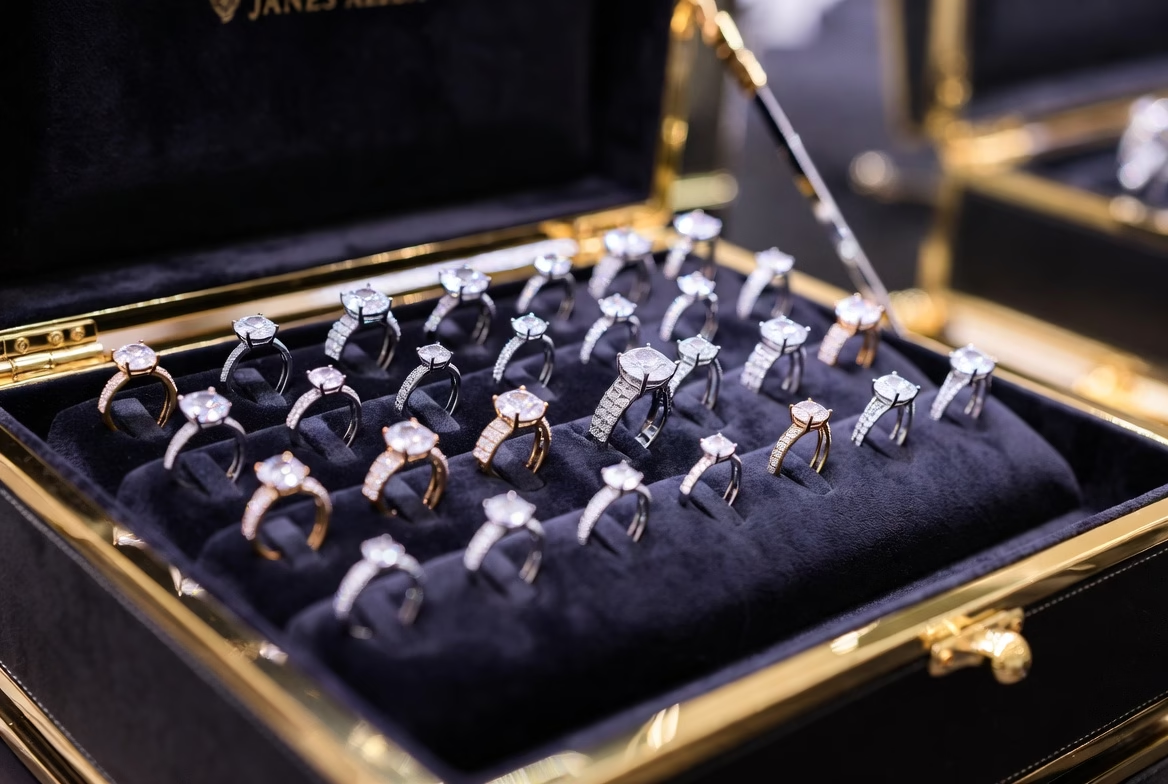
Most regret in online ring buying comes from two avoidable mistakes: poor inspection and timeline pressure. These three actions reduce both right away — and the final buyer check helps you confirm nothing important was missed before checkout.
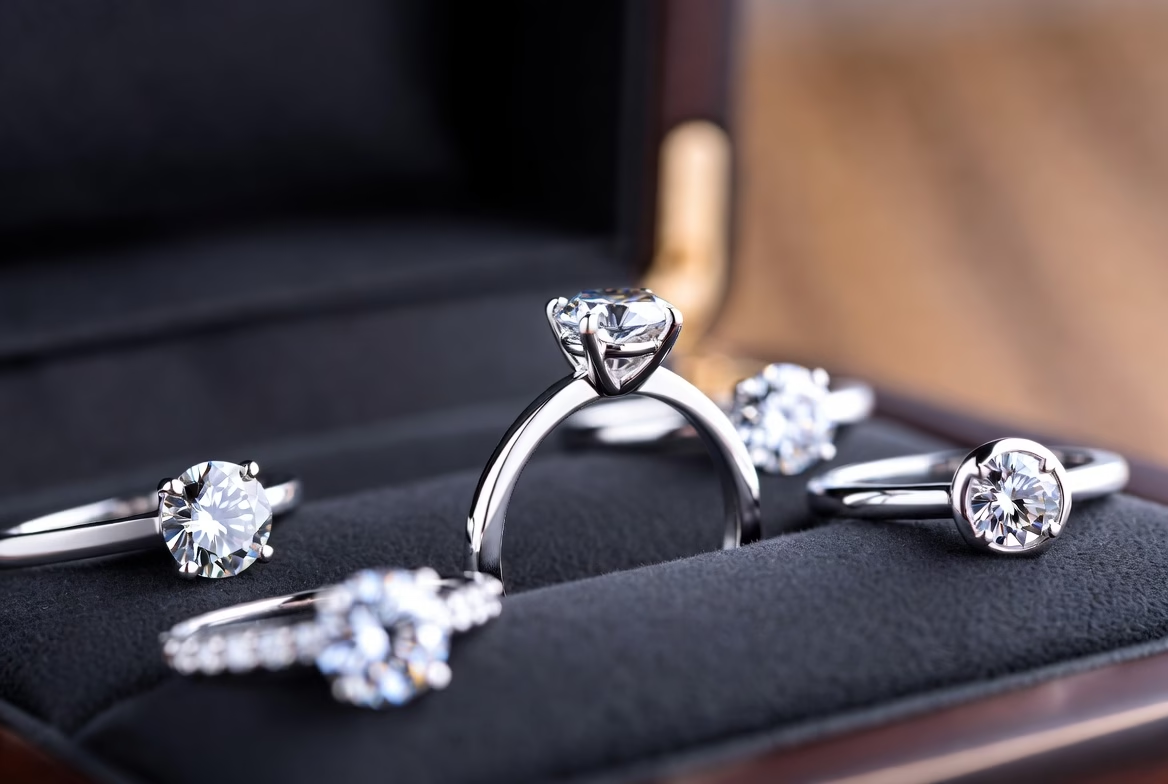
Before You Click “Buy” — Run This 4-Step Check
This is the fastest way to reduce the two most common causes of regret: inspection mistakes and deadline pressure.
- Did you inspect the diamond in 360° HD at full zoom?
- Is the setting at least ~1.8mm+ if the wearer is active?
- Did you confirm resize eligibility for the exact setting?
- Are you ordering at least 8 weeks before the proposal, and more during peak periods?
James Allen Buying Experience: Where Shoppers Get Stuck — and How to Avoid It
The main friction is decision fatigue

James Allen’s huge inventory is a strength, but it can also slow buyers down. Without clear boundaries, comparison becomes a loop: find a strong stone, wonder if a slightly better one exists, stretch the budget, then repeat.
The problem is usually not lack of options. It is lack of constraints.
Set your constraints before comparing diamonds
- Budget ceiling
- Preferred shape
- Target carat range
- Color floor (for example, H or better)
- Clarity floor (often VS2 or SI1 depending on the shape)
A better process: start with the setting
If you want the cleanest path, choose the setting first and the diamond second.
- Overall style
- How the diamond will visually present
- How durable the ring is likely to be for daily wear
James Allen vs Blue Nile 2026
For most buyers, this is not really a question of legitimacy. It is a question of buying style. James Allen is usually the better fit for shoppers who want more visual control before they spend, while Blue Nile often appeals to buyers who want a cleaner path and a slightly more curated feel.
Here is the short version: where James Allen has the clearer edge, where Blue Nile feels simpler, and which experience tends to reduce stress for first-time ring buyers.
| Factor | James Allen (2026) | Blue Nile (2026) | Winner for most first-time buyers |
|---|---|---|---|
| Diamond visualization | Best-in-class 360°/HD | Good, less immersive | James Allen |
| Inventory | Massive, broad | Large + curated | Tie |
| Buying vibe | Platform-driven, analytical | Curated, premium feel | Depends |
| Best for | Cautious first-time buyers | Confident shoppers | Depends |
Does James Allen Sell Lab-Grown Diamonds?
Yes. James Allen offers a broad lab-grown inventory with the same core strengths that make the platform useful overall: strong visualization, large selection, and easy comparison.
Lab-grown is usually most attractive for buyers prioritizing visible size for budget. It does not change the core ownership realities: setting quality, durability, resizing, and policy clarity still matter most.
FAQs (2026)
Clean answers to the questions buyers ask most before they commit.
Is James Allen worth it in 2026?
For many first-time ring buyers, yes. As of early 2026, James Allen remains one of the stronger online options if you value strong diamond visualization, broad selection, and meaningful buyer protections — especially when you order early and choose a setting suited to real daily wear.
Has James Allen quality changed?
The more useful question is whether the ownership outcome changes. In 2025–2026, the main quality drivers remain consistent: inspection confidence, setting structure, and policy clarity. Buyers who choose sensible designs and confirm resize and return details are still the ones most likely to have a smooth experience.
What are the most common James Allen complaints in 2026?
The most repeatable complaint patterns involve resizing and timing expectations, customer service delays during peak periods, and occasional pavé-related maintenance issues on delicate builds. Most of those risks are reduced by ordering early, confirming resize eligibility, and choosing sturdier designs for active wear.
Are James Allen settings good quality long term?
Generally yes for mainstream daily wear, especially when you choose conservative structures like solitaires, cathedral builds, sensible profile heads, or bezels for active lifestyles. Ultra-delicate micro-pavé and very thin bands raise the long-term maintenance burden regardless of retailer.
Are James Allen diamonds GIA certified?
Many James Allen natural diamonds are GIA certified, though certification can vary by individual stone. The smart move is to verify the grading report on the exact diamond and pair that with visual inspection, because visuals help reduce spec-only buying mistakes.
Does James Allen use IGI for lab-grown diamonds?
Yes, James Allen commonly uses IGI grading reports for many lab-grown diamonds, though grading can vary by stone. The safest move is to confirm the report on the exact diamond and inspect it visually before you buy.
James Allen vs Brilliant Earth 2026 — which is better?
Many buyers choose James Allen for its inspection tools, inventory depth, and more analysis-friendly buying experience. Many choose Brilliant Earth for design-led branding and ethics-forward positioning. The better choice depends on your priorities, but policies and setting durability deserve close comparison before you commit.
Is James Allen legit?
Yes. It is a well-established online retailer with mature operations, structured policies, and strong visualization tools. The main risks are not legitimacy risks — they are buyer-process risks, such as rushing timelines, assuming resizing is universal, or choosing a delicate design for hard daily wear.
