

James Allen Reviews (2026): Honest Quality, Pricing & Complaints Breakdown
Independent, consumer-first analysis of James Allen as an online engagement ring retailer — built for proposal planners who want transparency, long-term durability, fair pricing behavior, and low-drama ownership.
Methodology & 2026 Update
- Last updated: February 2026
- Next review update scheduled: June 2026
- Reviewed 50+ James Allen settings in 2025–2026
- Checked against: Trustpilot, BBB, Reddit, and Signet investor filings
- Evaluation criteria: durability, fulfillment speed, inspection tools, return safety
Disclosure: Links may earn a commission at no extra cost to you. That supports independent testing and updates. It never changes what I recommend.
Start Here
Most regret in online ring buying comes from two things: poor inspection and deadline panic. These actions reduce both immediately.
Snapshot Verdict
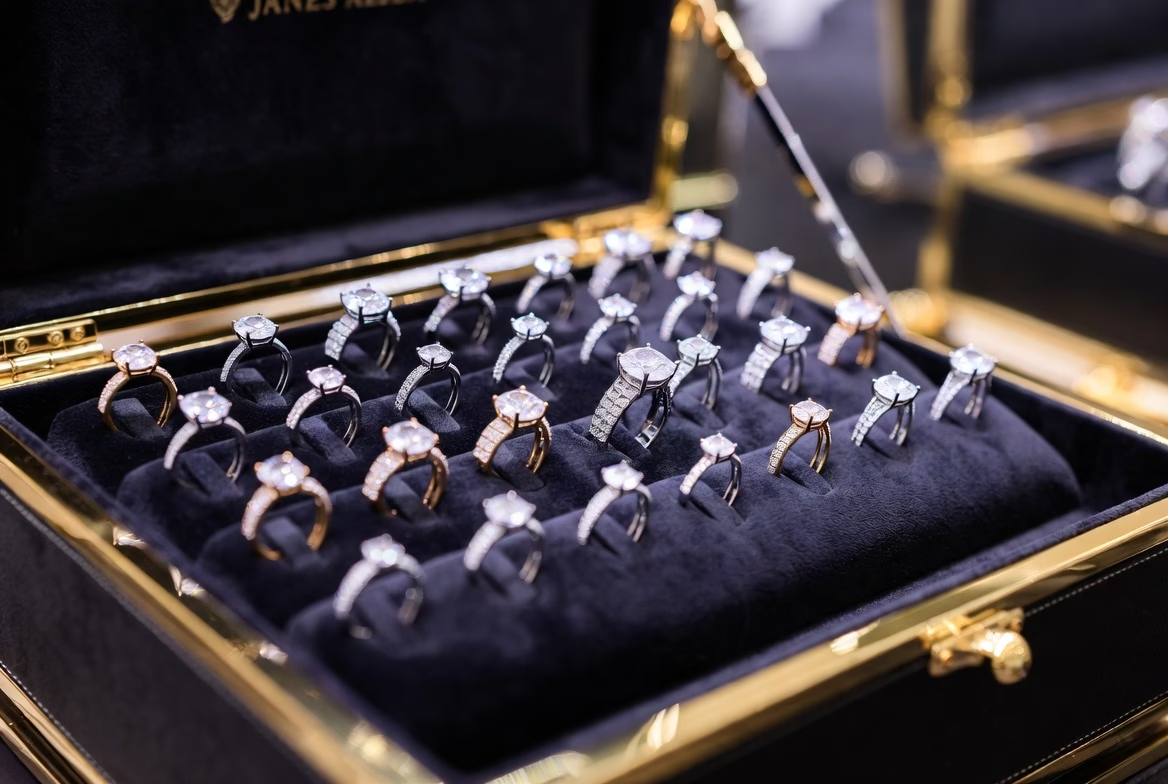
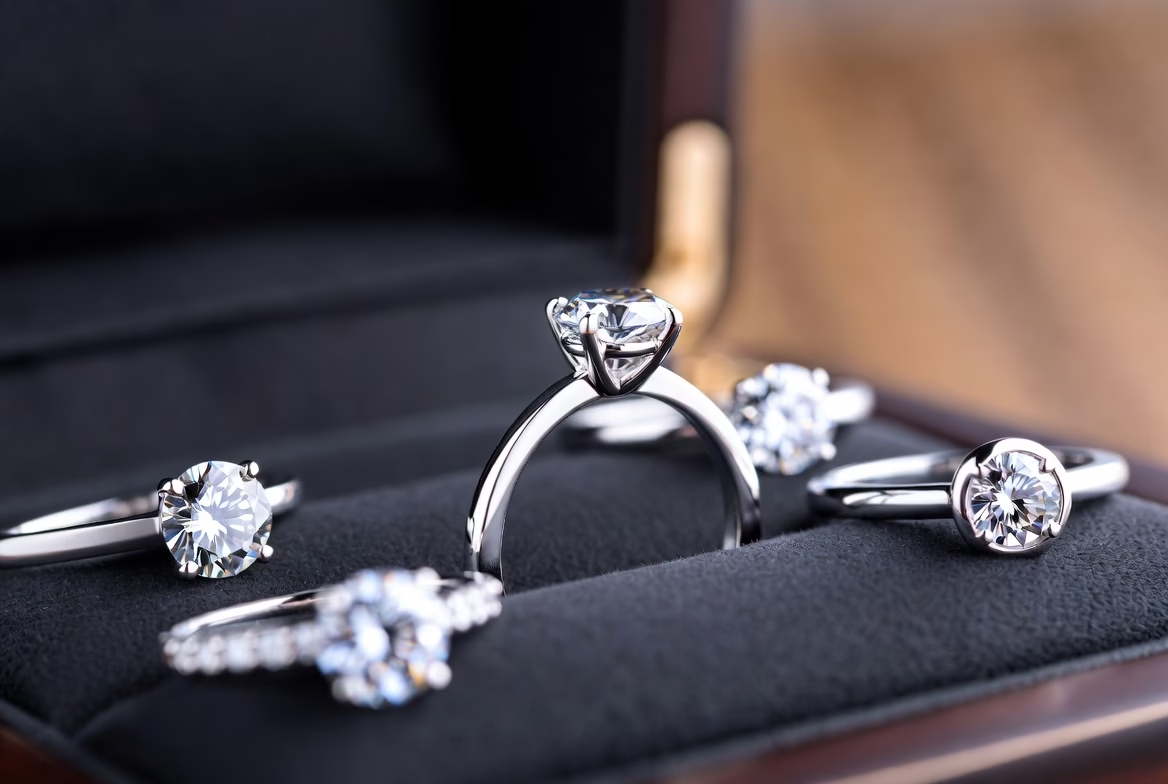
One-sentence verdict: As of early 2026, James Allen is one of the strongest online picks if you want maximum diamond visibility, a reliable mainstream setting catalog, and buyer protections that reduce proposal risk — as long as you plan timelines carefully and choose a design that matches her lifestyle.
Retailer Scorecard (2026)
| Dimension | Score | What it means for you |
|---|---|---|
| Diamond Visualization | ⭐⭐⭐⭐⭐ | Best-in-class “see it before you buy it” confidence. |
| Setting Reliability | ⭐⭐⭐⭐☆ | Built for daily wear; not artisan one-off bench work. |
| Pricing Behavior | ⭐⭐⭐⭐☆ | Competitive value; not always the lowest on every stone. |
| Returns + Warranty Framing | ⭐⭐⭐⭐⭐ | Strong safety net when you confirm exceptions in advance. |
| Proposal Experience Fit | ⭐⭐⭐⭐☆ | Great for online-first buyers; can overwhelm indecisive shoppers. |
Best for
- Men who want control + clarity without showroom pressure
- Buyers comparing many stones and rejecting “sales energy”
- Proposal planners who need predictable logistics and strong policies
Not ideal for
- Those seeking atelier-level bespoke / hand-forged individuality
- Shoppers who must try on many rings in person before committing
- Buyers chasing the absolute lowest price even if it increases risk
Author & Editorial Standards

By Nassim Parker — Diamond Buying Analyst. I’ve spent 12+ years in diamonds and precious metals helping proposal planners avoid expensive mistakes in settings, stone selection, and policy assumptions. Engagement rings are not “just jewelry.” They’re a high-stakes purchase tied to emotion, timing, and long-term wear — which is why this page is written to function as a decision tool, not a brochure.
What makes this review consumer-first
- No paid placements. Recommendations are driven by buyer outcomes, not brand preferences.
- No brand-controlled conclusions. If something creates proposal risk, it gets called out.
- Criticism included when it prevents regret or protects your timeline.
- Updated on a schedule (see the methodology block under the hero).
Review scope & methodology
This review focuses on what actually predicts a good ownership experience: inspection confidence, setting structure, policy safety, and operational predictability — not just day-one sparkle.
What I evaluated
- Diamond transparency tools: visualization quality, browsing efficiency, pairing confidence
- Setting durability posture: prong architecture, band thickness, pavé risk zones, profile height
- Pricing behavior: value positioning, promotion patterns, fairness vs “race to the bottom”
- Buyer protections: return window framing, resizing caveats, warranty boundaries
- Operational trust signals: delivery predictability, support structure, high-volume behavior
What I intentionally did not teach here
- Step-by-step diamond filtering tactics (that’s a separate guide)
- Advanced proportion strategy / cut optimization (covered elsewhere)
- Deep lab-grown science (kept retailer-level here so this page stays focused)
Why this matters
Most “bad” online ring outcomes aren’t because the diamond is fake. They happen because someone assumed policies, rushed timelines, or chose a delicate design for an active lifestyle.
Where James Allen Fits in the Online Diamond Market (2026)
James Allen isn’t trying to be a boutique studio. It’s a platform-first online jeweler built around a single principle: reduce uncertainty by showing you more.
That sounds simple, but it changes everything. The ability to inspect stones visually, compare dozens quickly, and build a ring without a salesperson hovering over you is exactly what many proposal planners want. In 2026, “confidence tools” are not a luxury. They are the difference between buying calmly… and buying blind.
The platform posture (what it means in real life)
- Huge inventory: You can get picky without guilt. That’s how you avoid “settling.”
- Build-your-ring flow: You can preview pairings and reduce proportion surprises.
- Operational maturity: You’re buying from a system designed to ship thousands of rings — not a hobbyist seller.
James Allen operates under Signet (a major jewelry umbrella). In 2026, that often correlates with standardized policies and mature fulfillment systems — not perfection, but usually lower operational risk than unknown sellers.
James Allen is best viewed as a “clarity and control” retailer. If you want an online buying experience that makes you feel like you’ve done your homework — this is one of the strongest ecosystems for that.
Is James Allen Good Quality?
If your core fear is: “Am I about to spend thousands online and regret it?” — this is the section you actually came for.
Short answer: Yes — for the right buyer, and for the right build. In 2026, “good quality” isn’t about marketing words like luxury or premium. It’s about whether the ring holds up under real life, and whether the buying process prevents avoidable mistakes.
What “quality” means in engagement rings
A ring can look amazing on day one and still be a bad purchase if it becomes a maintenance trap. True quality is a combination of three realities:
- Diamond legitimacy: certification + what you can actually see before buying
- Setting durability: structural choices that survive daily wear
- Ownership experience: returns, resizing, warranty clarity — and how predictable fulfillment feels
The quality reality (not marketing)
- Diamonds are typically listed with reputable grading documentation (baseline legitimacy).
- The platform’s visualization tools reduce spec-sheet-only mistakes.
- Mainstream settings are designed for daily wear — but durability varies by style and thickness.
What good quality feels like after a year
Quality isn’t just sparkle. It’s the quiet stuff you don’t post online:
- Prongs still feel secure when you run a fingernail around them
- The band doesn’t feel flimsy or “wire-like”
- The ring doesn’t snag constantly on sweaters and hair
- Pavé doesn’t become a monthly anxiety event
- Resizing (if needed) doesn’t hijack your entire engagement timeline
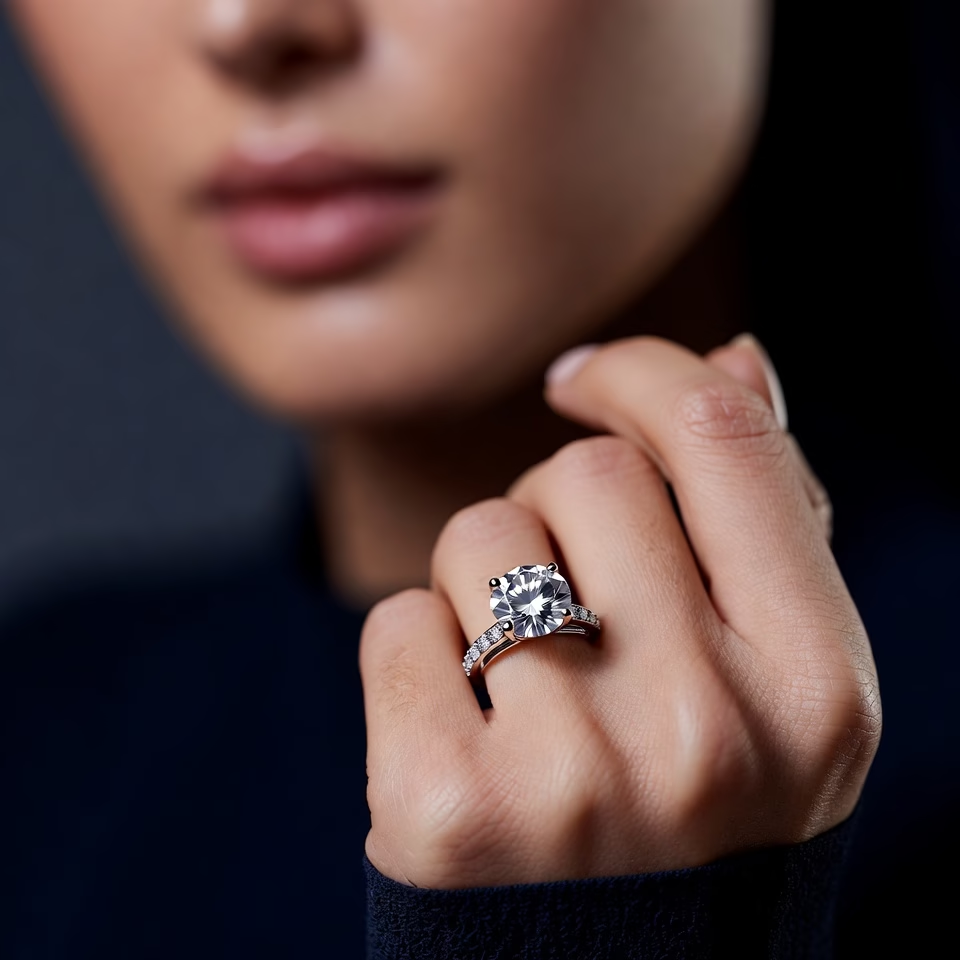
If you order with buffer time and choose a structurally sensible setting (especially for an active wearer), James Allen tends to deliver the outcome most proposal planners want: a low-drama, high-confidence ownership experience.
James Allen Complaints 2026 – What Patterns Actually Show
This is the part of the review that most retailers avoid — and it’s also where buyer trust is won. When someone searches “James Allen negative reviews” or “James Allen complaints,” they’re not looking for a brand defense. They’re trying to answer one question:
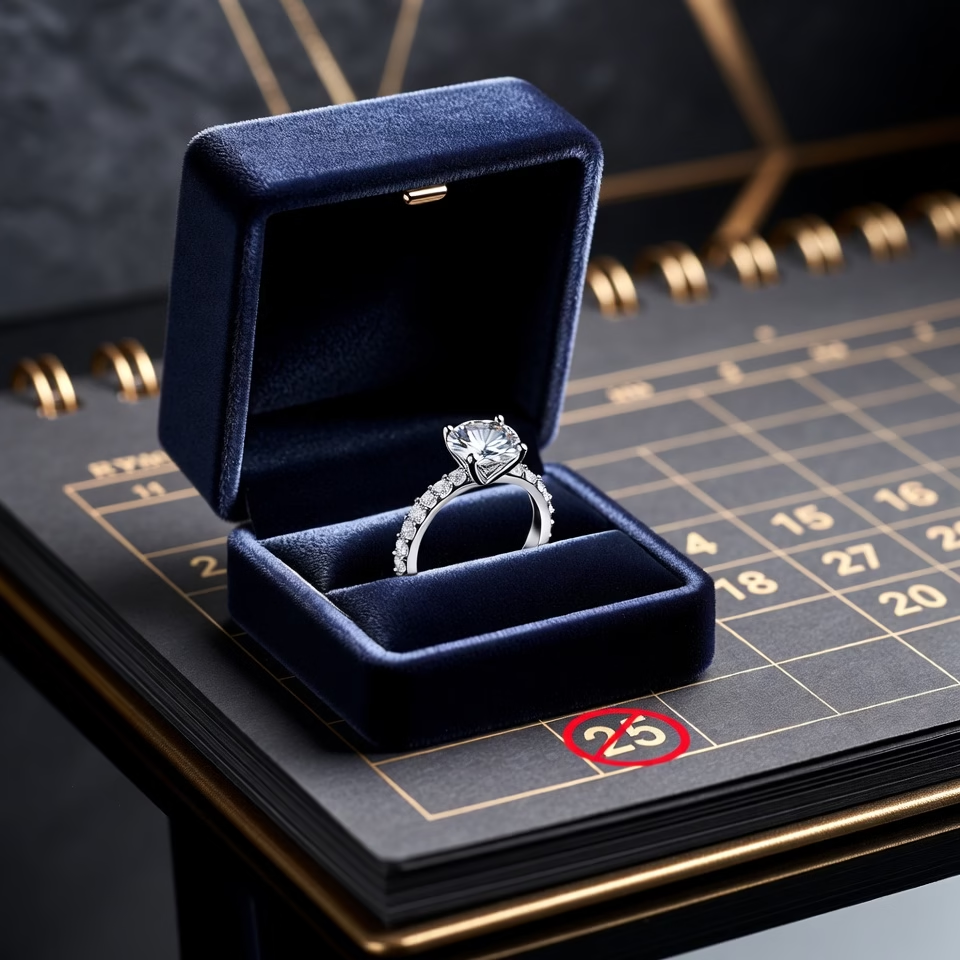
“Are these problems random… or predictable?”
Here’s the unbiased truth: no large online jeweler has zero complaints. The real question is whether complaints reflect a pattern (systemic risk) or an anomaly (edge-case outcome). In high-volume retail, even a tiny failure rate creates visible noise.
The complaint categories that repeat (and why)
Across public review platforms and forums, negative experiences tend to cluster into a few recurring buckets — and most of them are not “fake diamond” problems. They are assumption + timeline problems.
| Complaint type | Frequency pattern | Root cause | How to avoid / mitigate |
|---|---|---|---|
| Resizing delays / confusion | High | Peak backlog + eligibility exceptions; buyers assume “easy resize” | Order 8–10+ weeks early; confirm resize rules before checkout; choose safer settings |
| Delivery timing stress | High | Proposal deadlines collide with holiday volume + carrier variability | Build buffer; avoid last-minute shipping; confirm production time vs ship time |
| Pavé stone loosening | Medium | Micro-pavé density + active lifestyle + impact exposure | If she’s active: reduce micro-pavé, choose sturdier bands (1.8mm+), lower profile |
| Customer service wait times | Medium | Volume spikes (peak seasons) | Use chat off-peak; document everything; don’t anchor proposal to “maybe” updates |
| Expectation mismatch (“looks different”) | Low–Medium | Screen perception vs real-life scale; head height surprises | Inspect 360° at full zoom; compare mm measurements; choose sensible profile height |
| Structural issues (rare but scary) | Low | Outliers + design-lifestyle mismatch | Pick conservative prong architecture; avoid ultra-thin builds for daily wear |
Calm quantification (trust multiplier)
When you read complaints online, your brain treats every story like it could happen to you tomorrow. The correct way to interpret reviews is to separate emotional intensity from frequency patterns.
What the complaint patterns likely mean for you
If you’re buying an engagement ring, you don’t need “perfect.” You need a process that prevents avoidable mistakes. The complaints that matter most are the ones that create proposal risk:
- Deadline risk: delivery delays when you planned too tightly
- Fit risk: resizing assumptions that collide with eligibility rules
- Maintenance risk: micro-pavé on an active wearer
How to “neutralize fear” without ignoring reality
You don’t need to dismiss negative reviews. You need to convert them into a safety checklist.
Buyer mindset shift: Most satisfied buyers aren’t “lucky.” They simply didn’t buy last-minute, didn’t assume resizing is universal, and didn’t choose a fragile setting for a rough lifestyle.
Resizing: eligibility + timeline (the real buyer trap)
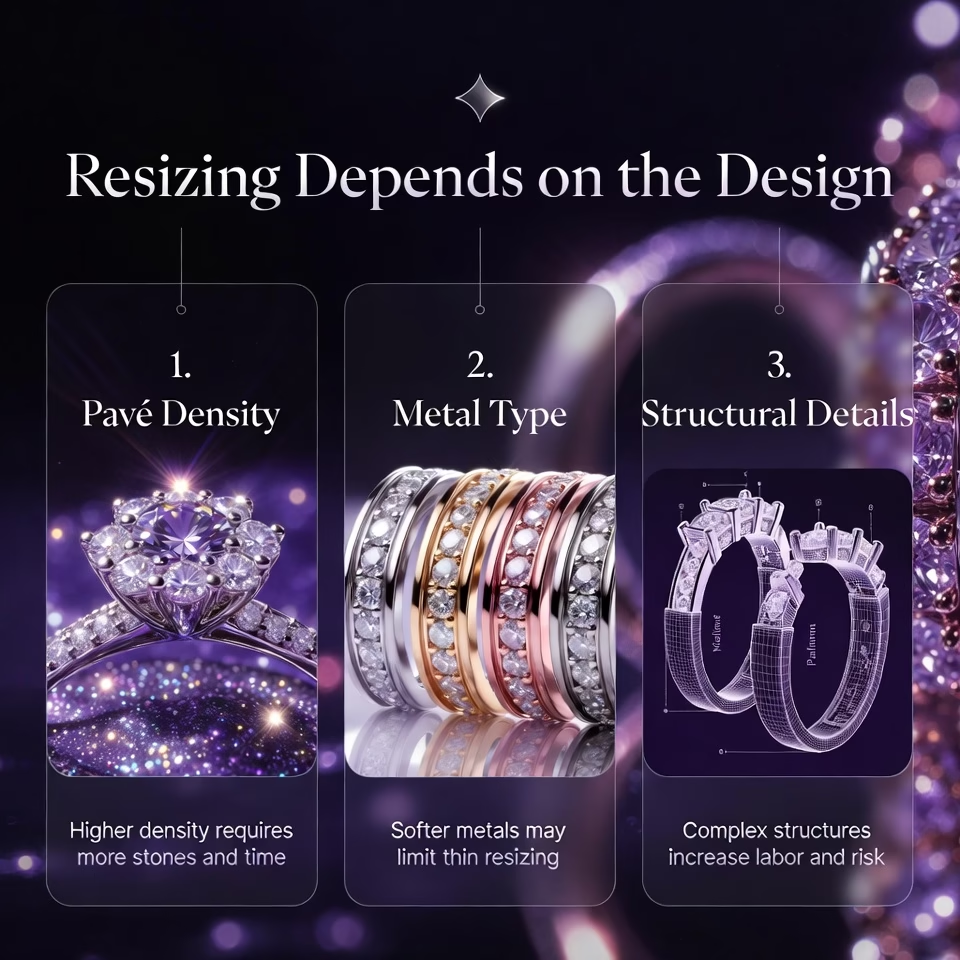
Resizing is one of the most common complaint triggers across large online jewelers — not because resizing is inherently “bad,” but because buyers assume every ring resizes easily and quickly. In reality, resizing depends on the design: pavé density, metal type, and structural details can all change what’s eligible and how long it takes.
The safe approach is simple: confirm resize eligibility during checkout, then assume that resizing during peak seasons may take longer than you want. If you’re planning a proposal near holidays or spring peaks, the practical solution is: order early and build buffer.
James Allen Engagement Ring Review: What the Buying Experience Actually Feels Like

You’re not buying “a ring.” You’re buying a moment.
The weight of the box in your pocket.
The pause before she realizes what’s happening.
The split second where her expression changes when it finally clicks.
Then comes the part most first-time buyers never think about.
She slips the ring on… and instinctively turns her hand in the light.
That quiet moment — when the diamond catches light for the first time — is when the ring either feels right… or it doesn’t.
Everything about James Allen’s platform is designed to increase the odds that it does.
Not by selling harder, but by reducing the uncertainty that causes second-guessing later.
The real advantage of buying online isn’t convenience. It’s clarity.
Why the Buying Flow Works for First-Time Proposal Planners
Most engagement ring buyers are doing this for the first time. That matters.
In a traditional showroom, you’re making a high-stakes decision while someone is standing across the counter waiting for you to react. Even good salespeople create subtle pressure simply by being present.
James Allen removes that dynamic entirely.
You can take your time, zoom into diamonds, and compare stones without anyone hovering nearby. That freedom changes how people evaluate diamonds.
Instead of reacting emotionally to one stone under showroom lighting, you can compare dozens side-by-side and start noticing the details that actually matter:
- how different proportions affect brilliance
- how inclusions really appear in real magnification
- how carat weight translates visually once it’s set
- This leads to calmer, more deliberate decisions.
You can preview proportions and spread to avoid the classic regret many buyers have later: “I thought it would look bigger.”
You can also walk away, think about it, and come back the next day with a clearer head — something almost no retail environment encourages.
In other words, the buying flow respects the reality of the decision you’re making.
You’re not picking a pair of shoes. You’re choosing a diamond someone will wear every day for decades.
The Hidden Downside: Decision Fatigue
The same advantage that makes James Allen powerful can also work against you.
Their inventory is enormous.
Thousands of diamonds in every shape, size, color, and clarity range can feel empowering at first… until it becomes overwhelming.
Buyers who don’t set limits often fall into a familiar loop:
They find a great stone… then wonder if a slightly better one exists.
Then they compare again.
Then they upgrade slightly.
Then they repeat the process.
Eventually the search stops being productive and starts becoming exhausting. This is a common pattern with large online inventories, and the best way to avoid it is simple:
Set your constraints before you start comparing diamonds.
Decide in advance:
- your budget ceiling
- your preferred shape
- your target carat range
- your color floor (for example, H or better)
- your clarity floor (often VS2 or SI1 depending on the shape)
Once those boundaries are set, you can evaluate stones within that lane instead of endlessly expanding it.
A Simple Process That Prevents Endless Comparisons
If you want the cleanest buying experience, reverse the order most shoppers instinctively follow.
Instead of choosing the diamond first, start with the setting.
The setting determines:
- the overall style of the ring
- how the diamond visually presents
- how durable the ring will be for daily wear
A minimalist solitaire, for example, emphasizes diamond size and proportions. A halo setting can make a slightly smaller center stone appear larger.
Once the setting is chosen, you can select a diamond that complements it — instead of comparing hundreds of stones without context.
- This simple shift dramatically reduces decision fatigue and usually leads to better overall ring design.
- It’s how experienced jewelers approach the process, and it works just as well for first-time buyers.
James Allen Ring Durability (Long-Term Wear Reality)
Durability is where long-term ownership is won or lost. A diamond can be perfect, and the ring can still become a headache if the structure doesn’t match real life.
Durability rule: The ring doesn’t need to survive a war — it needs to survive a normal life: handbags, gym sessions, door handles, travel, winter gloves, and accidental knocks.
The durability factors that matter most (2026 buyer reality)
- Prong architecture: how the stone is actually held (not how it’s photographed)
- Band thickness: thin looks elegant; thin also wears faster (especially at the bottom)
- Head height: higher profile increases snag risk and impact leverage
- Pavé density: more stones = more maintenance points
- Metal choice: 14k vs 18k vs platinum affects hardness, wear behavior, and maintenance
Pavé vs solitaire: the honest trade-off
Pavé is not “bad.” Pavé is simply high sparkle with higher maintenance probability. Each small stone is set into tiny beads/prongs. That creates more potential failure points than a solitaire.
If she’s careful with jewelry, pavé can be a beautiful daily wear choice. If she’s active, constantly lifting, traveling, working with hands, or frequently bumping her ring, micro-pavé becomes a higher-risk design — not because James Allen “can’t set pavé,” but because pavé is inherently more sensitive to impact.
Simple rule: If she’s hard on jewelry, prioritize a solitaire, cathedral, bezel, or a sturdier pavé with fewer stones and thicker band.
Prong security: what buyers actually worry about
Searches like “James Allen prongs falling out” usually reflect a deeper fear: “Will the stone still feel secure after a year?” Prong security depends on:
- Prong thickness and shape
- How high the head sits (higher = more leverage on impact)
- How often the ring catches on fabrics
- Whether the wearer removes the ring during rough activity
A conservative 4–6 prong solitaire with a sensible profile is one of the most reliable long-term structures. Bezel settings can be even safer for active lifestyles.
Thin bands vs 1.8mm+: the line most buyers don’t think about
If you want a ring that still looks good after years of daily wear, the band matters. Ultra-thin bands look delicate and trendy, but they are more likely to:
- Feel “wire-like” (especially in larger finger sizes)
- Warp slightly over time with daily stress
- Wear down faster at the bottom of the shank
- Amplify pavé maintenance risk
Durability baseline: If she’s active, aim for a setting that’s at least ~1.8mm+ in band thickness (where available), and avoid ultra-delicate micro-pavé builds.
Active lifestyle considerations (the real-world test)
Here’s the practical way to choose:
- If she wears rings while lifting/gym: prioritize low profile and reduced pavé.
- If she works with hands (healthcare, hospitality, hair, design): prioritize snag resistance.
- If she travels often: prioritize easy maintenance and simple prong checks.
- If she’s sentimental and never removes jewelry: prioritize structural safety over ultra-delicate style.
How common styles hold up long-term
Cathedral settings
Pros: supportive structure, classic look, tends to distribute stress well.
Watch-outs: if the head is tall, snag risk increases.
Best for: timeless builds that prioritize security.
Pavé settings
Pros: maximum sparkle.
Watch-outs: higher maintenance probability, especially micro-pavé on thin bands.
Best for: careful wearers who can remove the ring during rough activity.
Bezel settings
Pros: security + low snag + protective edge; great for active lifestyles.
Watch-outs: some buyers feel it’s less “airy” than prongs.
Best for: low-maintenance ownership and durability-first buyers.
Tiffany-style solitaires (classic 4–6 prong)
Pros: timeless, easy to maintain, strong long-term posture.
Watch-outs: head height varies — choose a sensible profile.
Best for: men who want the safest long-term bet.
For the technical breakdown (prongs, pavé risk zones, thickness ranges), read the full James Allen Settings Quality & Durability Deep Dive →
Does James Allen Sell Lab-Grown Diamonds?
Yes. As of early 2026, James Allen continues to offer a broad lab-grown inventory with the same core platform advantage: you can inspect stones with strong visualization tools and compare options at scale.
Why buyers choose lab-grown in 2026
You can often move up in visible size, especially around 1ct+, while keeping clarity and color in a safe range. That is why lab-grown remains one of the strongest proposal strategies for budget-to-impact optimization.
What lab-grown changes — and what it doesn’t
Lab-grown changes the economics of size. It does not change the physics of durability in a ring. A lab diamond is still a diamond.
What actually shapes long-term ownership
Your long-term ownership experience is still dominated by how the ring is built, how the wearer lives, and what policy protection you have after purchase.
Lab-grown pricing in 2026
Lab-grown diamond prices have generally trended downward across the market over the last few years. In 2026, the real question is not whether lab is “cheaper” — it is how to buy lab without regret.
Regret usually comes from either paying a premium when equivalent performance exists elsewhere, or assuming lab behaves like natural in long-term value perception.
How to use lab-grown as a value lever
- Decide whether you are optimizing for visual size or natural rarity meaning.
- Be honest about sentiment: tradition may still feel more emotionally aligned for some buyers and families.
- If “wow size” is the mission, lab-grown is often the most efficient route.
Are James Allen diamonds GIA certified? Does James Allen use IGI for lab-grown?
Many buyers search this because certification is the legitimacy baseline. In practice, shoppers commonly look for top-tier grading reports on natural stones, while lab-grown diamonds are often paired with different grading bodies.
The practical point is not just the letters on the certificate — it is whether you verify the report and inspect the diamond visually so you do not buy on specs alone.
Consumer-first filter: Certification is the baseline. The real confidence upgrade is pairing certification with strong visuals, which remains one of James Allen’s biggest platform advantages.
