
James Allen Lab-Grown Diamonds Review (2026): Pricing, Quality, Best Picks, and the Hidden “Gotchas” Buyers Miss
If you’re researching a James Allen lab-grown diamonds review, you’re already ahead of most buyers. The real question isn’t “Are lab diamonds real?” It’s:
Is James Allen a smart place to buy a lab-grown diamond online without overpaying, getting a dull stone, or falling for “paper-perfect” specs that don’t look impressive in real life?
James Allen has two genuine advantages that matter more than marketing:
But here’s the truth most “review” pages won’t say clearly:
So the real question becomes:
Is James Allen a good place to buy a lab-grown diamond if you care about sparkle, transparency, and not getting tricked by specs alone?
Yes—if you buy the right way. This guide shows you exactly how.
Quick Verdict: Is James Allen worth it for lab-grown?
James Allen lab-grown diamonds: worth it?
Yes—for most online buyers, especially if you want to see what you’re buying and reduce risk through clear policies.
Best for
- First-time lab-diamond buyers who want video + certificate transparency
- Shoppers targeting 1.50–2.00 ct under a firm budget
- Buyers who want a “big look” while still optimizing sparkle and value
Not ideal for
- Buyers who care primarily about resale value
- Shoppers who want the absolute lowest price and do not care about brand/service
- People who want “the cheapest 2ct” without doing any comparisons
Who should buy from James Allen (and who should not)
You should strongly consider James Allen if:
- You value visual verification (360 video, high magnification) over blind spec shopping.
- You want a robust return window to buy online with confidence.
- You care about reducing “regret risk” more than saving the last few dollars.
You may be better elsewhere if:
- Your primary objective is lowest price for identical specs (some competitors often undercut)
- You do not want to evaluate optics and you prefer a curated, pre-vetted selection
- You are purchasing for “future value” (lab-grown is typically not a resale play)
How we evaluate James Allen lab-grown diamonds (methodology)
Most reviews stop at carat, color, and clarity. That is how buyers end up with a diamond that looks dull—even when the certificate looks “perfect.”
Here is the exact framework we use to identify lab-grown diamonds that look expensive in real life.
1) How we filter inventory (so you start in the right lane)
We filter for the highest likelihood of strong visual performance and low regret:
- Shape-first filtering: Round is the most forgiving; fancy shapes require stricter screening.
- Value-focused ranges: We aim for “eye-clean value” (where buyers often overpay for unnecessary grade upgrades).
- Cut-first prioritization: We shortlist stones with strong cut potential, then confirm optics in the 360° view.
- Spread check (mm value): We compare face-up millimeters (not just carat weight) to avoid paying for hidden depth.
Why it matters: You’re buying what the eye sees—brightness, size impression, and sparkle—not a spreadsheet.
2) What we verify in the 360° HD video (deal-breakers)
James Allen’s Diamond Display Technology™ offers 360° HD views and up to 40x magnification, allowing a much deeper inspection than a certificate alone.
We look for:
- Transparency issues (haze/milkiness): “Foggy” appearance that kills sparkle.
- Facet crispness: Sharp facet edges and clean junctions.
- Healthy contrast: Strong on/off pattern (“snap”) as the diamond moves.
- Inclusions under the table: Especially dark crystals near the center that can be visible even in VS2.
- Undertone (gray/brown tint): A persistent cast that reduces life in normal lighting.
Buyer takeaway: If it fails visually, it’s out—even if it’s D/VVS on paper.
3) Certificates we prioritize (and why)
We prioritize major lab reports because they improve comparability and reduce “spec inflation” risk.
- IGI: Common for lab-grown; typically provides the details buyers need to shop efficiently.
- GIA: Highly recognized; lab-grown report formats have changed (details below), but documentation is still useful for verification.
What matters more than the lab name: Certificates start the process; the 360° view finishes it.
4) How often the “top picks” framework is updated
Lab-grown inventory changes daily. That is why “top picks” should be filters + rules, not fixed SKUs.
We update the framework whenever:
- pricing meaningfully shifts,
- inventory quality changes,
- or grading/reporting standards evolve (notably GIA’s lab-grown changes). gia.edu+1
James Allen lab-grown diamonds: pros and cons
Pros | Cons |
✔
360° HD + up to 40x magnification for better transparency and inclusion assessment | ✖
Not always the lowest price for identical specs |
✔
30-day returns on items in original, unworn condition | ✖
Some buyers overpay by chasing “paper perfection” (D/VVS) when it does not show visually |
✔
One free resize within the first year (eligibility applies; fees after year one) | ✖
Inventory moves quickly; “top picks” can sell out |
✔
Large inventory and easy filtering | ✖
Price match has strict requirements (not a guaranteed lever for most lab-grown stones) |
✔
Brand trust and customer support infrastructure | ✖
Service experience can be low during peak periods |
The #1 mistake buyers make with James Allen lab diamonds
They shop by carat + color + clarity and assume everything else is equal.
It isn’t.
Two lab-grown diamonds with identical specs can look dramatically different because of:
- cut precision beyond the grade,
- transparency/haze,
- undertone (gray/brown tint),
- facet pattern and contrast,
- inclusion type and placement.
James Allen’s 360° technology helps reduce this risk—if you know what to check.
What James Allen sells (and what you should prioritize)
James Allen sells lab-created diamonds and provides education around its viewing technology so buyers can evaluate stones beyond the grading report.
What to prioritize as a lab-grown buyer
- Brightness and contrast in motion (video)
- Transparency (no haze)
- Undertone (avoid persistent gray/brown)
- Safe inclusions (off-center, non-distracting)
- Strong spread (face-up mm value)
James Allen policies that matter (and how to use them)
Returns
James Allen’s guarantee states you can return items within 30 days in original, unworn condition for a refund or exchange.
Buyer move: Order confidently, but inspect immediately on arrival (lighting tests, clean hands, keep packaging).
Resizing
James Allen states it will resize a ring once for free within the first year (with stated fees after that period).
Buyer move: Choose a setting that is resizable if sizing uncertainty exists. Confirm eligibility for the specific design.
Price match
James Allen’s Diamond Price Match policy requires a GIA grading report issued within the last year plus proof of the lower-priced offer.
Buyer takeaway: Treat price match as a bonus, not a plan—especially for lab-grown stones commonly graded by IGI.
2026 certification update: what changed with GIA (and what to do)
GIA announced it would move away from using the traditional color and clarity nomenclature for lab-grown diamonds and adopt descriptive terminology instead.
Trade coverage explains that GIA’s lab-grown quality assessment uses broader categories such as “premium” and “standard,” beginning around October 1.
What this means for you as a buyer
- IGI remains common for lab-grown reports and is still widely used for shopping comparisons.
- GIA documentation remains meaningful, but the presentation has evolved—focus on beauty, not chasing letter grades that may not even apply the same way.
If you’re wondering about James Allen’s overall buying experience , our detailed James Allen Review breaks it all down for you.
Lab-grown diamond reality check (value, pricing, and resale)
Buy lab-grown for:
- size
- sparkle
- budget efficiency
Do not buy lab-grown expecting it to behave like a scarce asset.
Buyer psychology tip: The best lab-grown purchase is the one that looks incredible on the hand and you feel good about paying today—even if resale is not meaningful later.
How to choose a James Allen lab-grown diamond that actually looks expensive
This is the “regret prevention” section. Use it and you’ll avoid 90% of bad outcomes.
Step 1: Choose the shape that matches your risk tolerance
Lowest risk / most consistent brilliance:
- Round brilliant (most forgiving; strongest performance consistency)
High visual size-per-dollar (but requires stricter screening):
- Oval
- Pear
- Marquise
Sophisticated “hall-of-mirrors” look (less sparkle, more clarity sensitivity):
- Emerald
- Asscher
Step 2: Use “eye-clean” logic, not perfection logic
For many round lab-grown diamonds:
- VS1 and a large portion of VS2 stones are eye-clean
- VVS often buys peace of mind more than visible improvement
When you may want higher clarity:
- Step cuts (emerald/asscher)
- Very inclusion-sensitive buyers
- Diamonds with inclusions near the center table
Step 3: Don’t automatically chase D color
For most settings:
- F–G appears colorless face-up to most people in white metals
- E is a luxury sweet spot
- D is prestige—nice, but often not the best value
Step 4: Cut is the conversion lever (and the beauty lever)
Cut quality is what makes strangers notice your ring across a room.
For lab-grown value, the most common “waste spend” is paying for ultra-high color/clarity while accepting mediocre optics.
The “Under $2,000” sweet spot strategies (what savvy buyers do)
If your budget is under $2,000 and you want a diamond that looks premium, pick a lane.
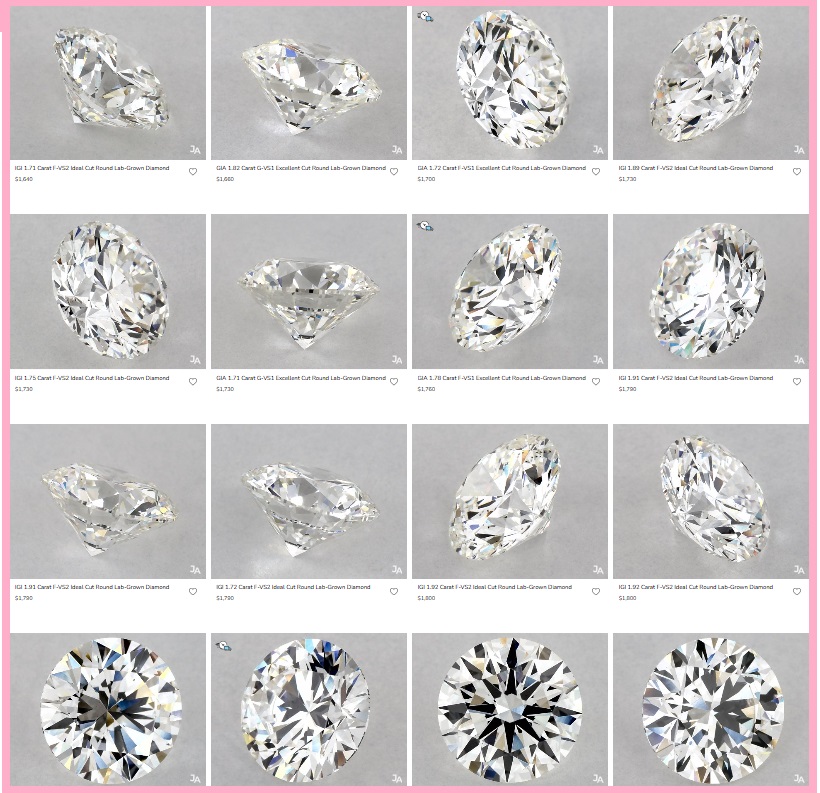
Strategy A: Max size while still looking expensive
Target:
- 1.70–2.00 ct
- F–H color
- VS1–VS2 clarity
- Ideal/Excellent cut (report-dependent) and strong optics in video
Why it converts: You get the “big look” without paying for invisible upgrades.
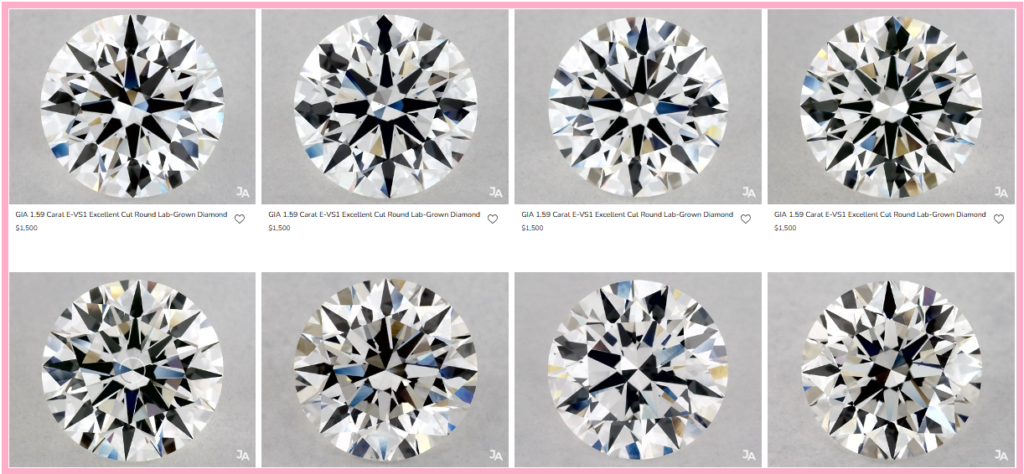
Strategy B: Luxury specs without paying natural-diamond premiums
Target:
- 1.40–1.70 ct
- E–F color
- VS1 clarity (or VVS2 if you want certainty)
- Strong optics in video
Why it converts: This is the “low risk, premium look” lane.
Best James Allen lab-grown diamonds (2026): top picks under $2,000 (framework)
Live inventory changes. The “right picks” are defined by rules, not fixed SKUs.
Selection rules (so you know this isn’t fluff)
We prioritize:
- best cut performance for the shape,
- eye-clean inclusions and safe placement,
- minimal undertone risk,
- strong spread (mm value),
- certificate transparency (IGI/GIA).
Quick comparison table: the “top picks” framework (Round)
Pick Type | Target Specs | Prioritize | Why it Wins |
Best overall value | 1.70–1.90 ct, F–G, VS1 | Ideal/Excellent + crisp contrast | Looks “luxury” without wasteful premiums |
Biggest look under $2k | 1.90–2.10 ct, G–H, VS2 | Spread + strong video optics | Maximum mm size while staying eye-clean |
Cleanest “safe buy | 1.50–1.80 ct, E–F, VS1 | Transparency + safe inclusions | Minimal visual risk |
Best for platinum | 1.60–1.90 ct, E–F, VS1 | Brightness/contrast | Crisp face-up whiteness |
Best bang-for-buck | 1.70–2.00 ct, F, VS2 | Video-confirmed eye-clean | Often the price-performance sweet spot |
Pick #1: Best overall value (Round)
Target: 1.7–1.9 ct, F color, VS1, Ideal/Excellent
Verify in video: no haze, crisp patterning, no dark inclusion under the table.
Pick #2: Biggest look under $2,000 (Round)
Target: 1.9–2.1 ct, G–H, VS2
Verify in video: eye-clean center, no gray cast, strong contrast.
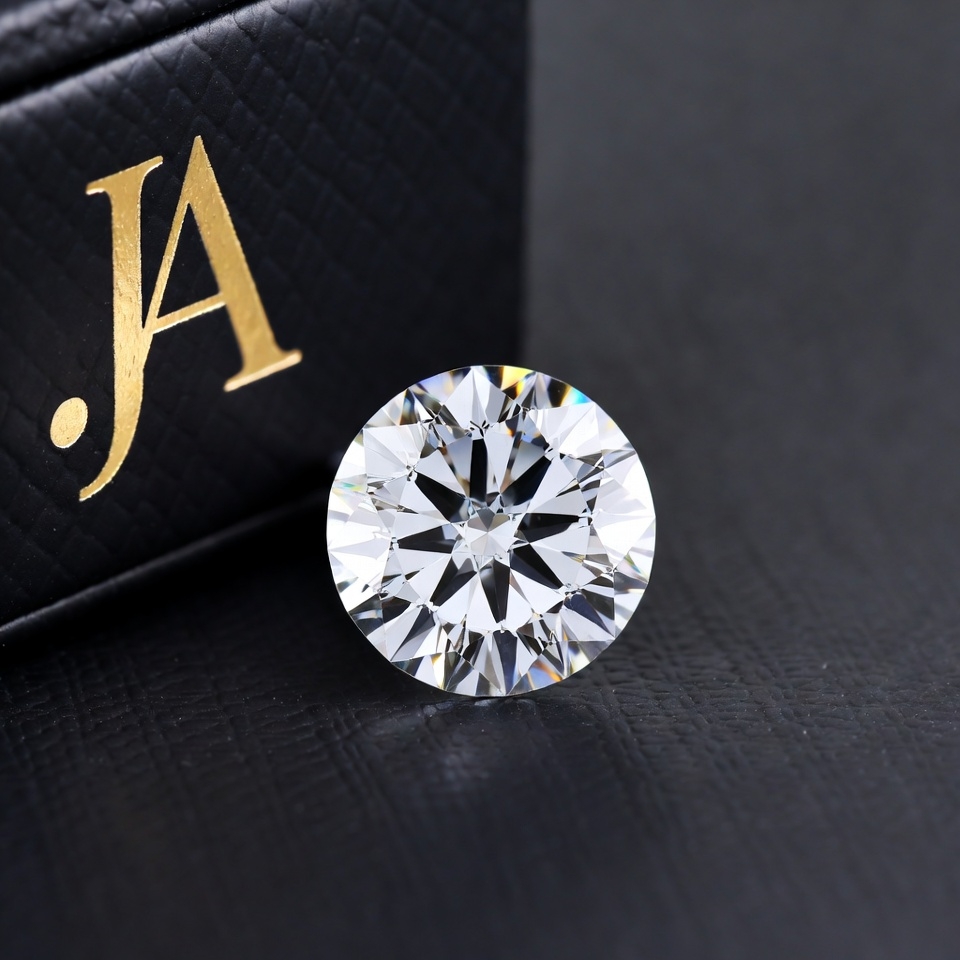
Pick #3: Luxury white without waste
Target: 1.6–1.9 ct, E color, VS1
Why it works: E looks elite in platinum/white gold, often better value than D.
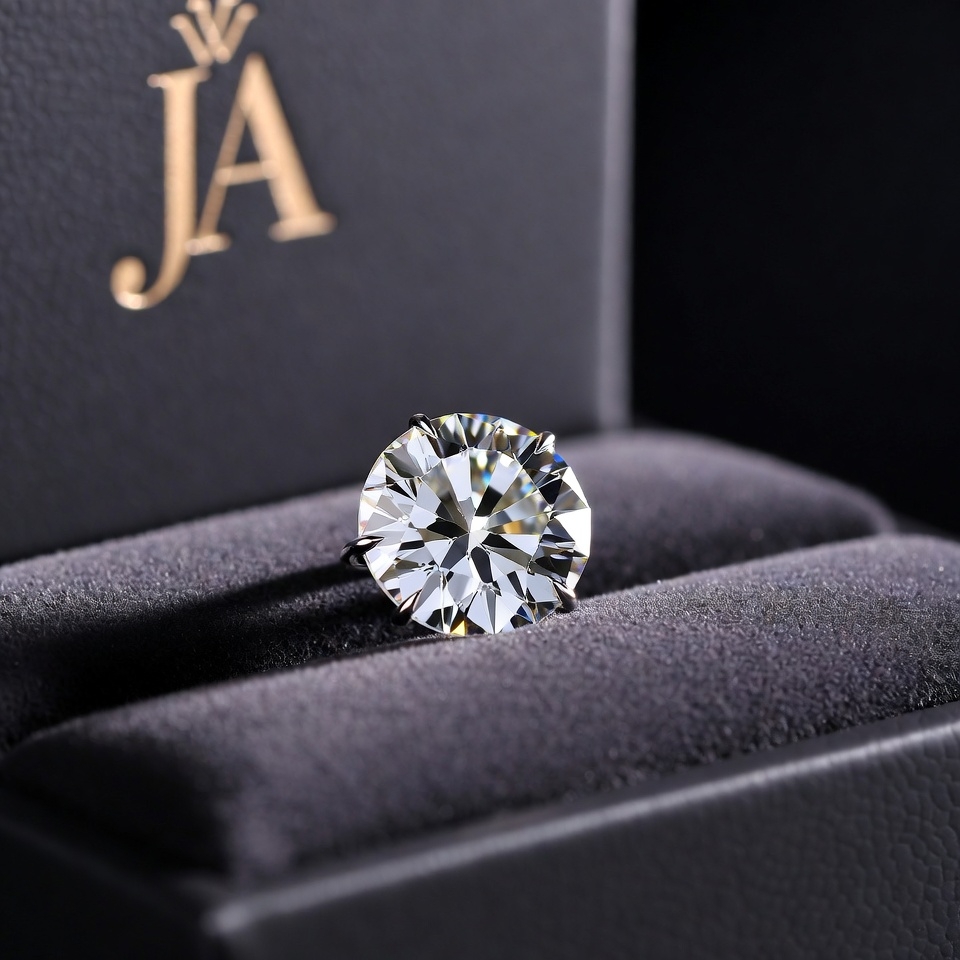
Pick #4: Psychological certainty pick
Target: 1.5–1.8 ct, F color, VVS2
Who it’s for: buyers who convert faster once they see “clean” in 360° and want certainty.
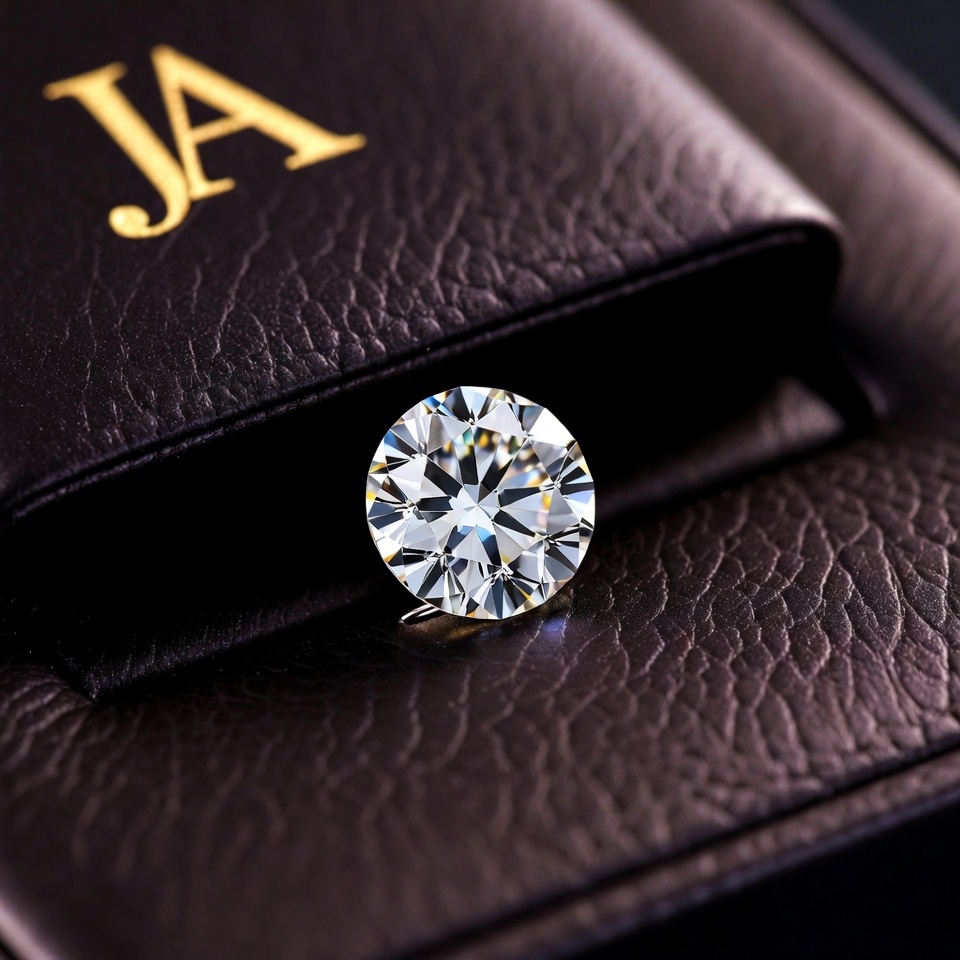
Pick #5: The “don’t overthink it” safe buy
Target: 1.5–1.7 ct, F–G, VS1
Why it converts: premium look in almost any setting with minimal learning curve.
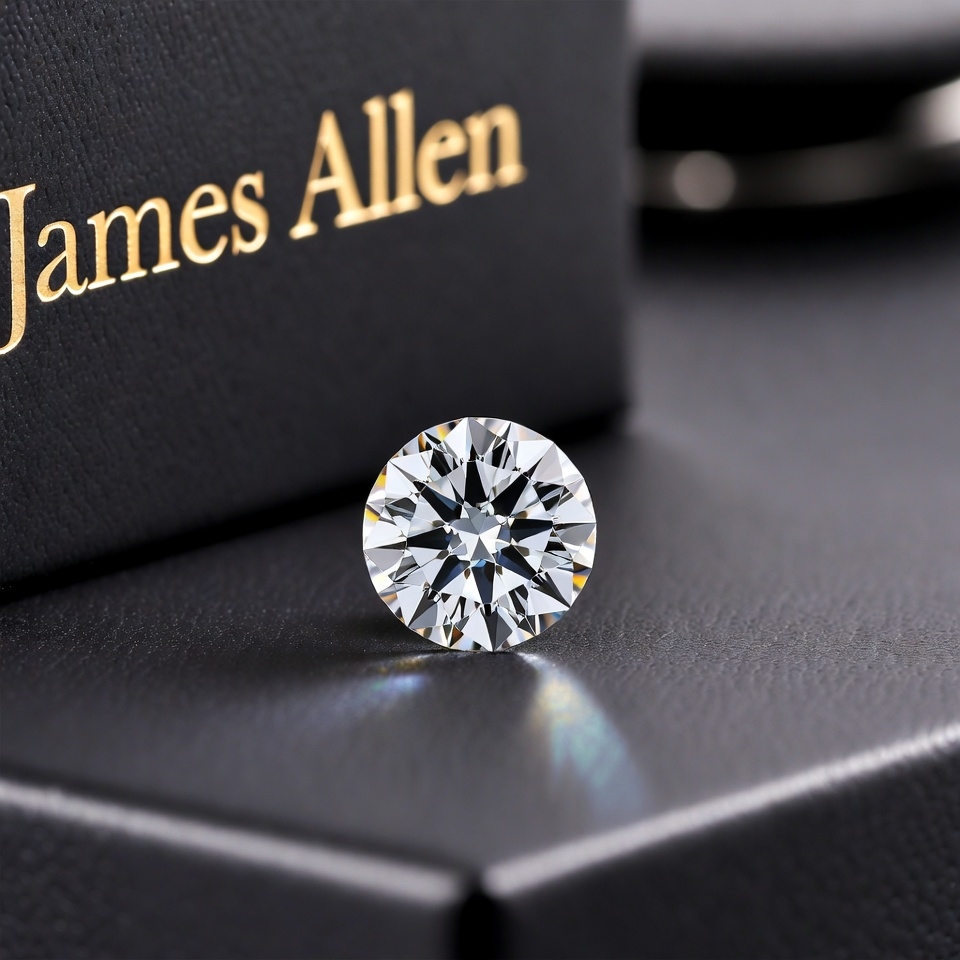
Picks #6–#10: Build your own (filters that win)
Recommended round filters:
- Shape: Round
- Carat: 1.50–2.10
- Color: E–H
- Clarity: VS1–VS2 (optional VVS2)
- Cut: Ideal/Excellent (then verify visually)
- Certificate: IGI or GIA
- Final step: video verification
James Allen vs competitors (lab-grown): what actually matters
Most comparison pages focus on brand names. Buyers should focus on five criteria:
- Inspection quality (video and consistency)
- Pricing posture (how often they undercut/overprice)
- Returns and resizing (risk control)
- Setting quality and transparency
- Support and guidance
James Allen’s key differentiator
James Allen’s Diamond Display Technology™ explicitly positions 360° HD inspection and up to 40x magnification as a way to evaluate beyond certificates.
That reduces regret risk—especially with lab-grown diamonds where transparency and undertone can matter more than the grade labels suggest.
Hidden red flags specs don’t reveal (the “dull diamond” insurance)
Red flag 1: Haze / milkiness
A diamond can look top-graded on paper and still look sleepy if transparency is compromised.
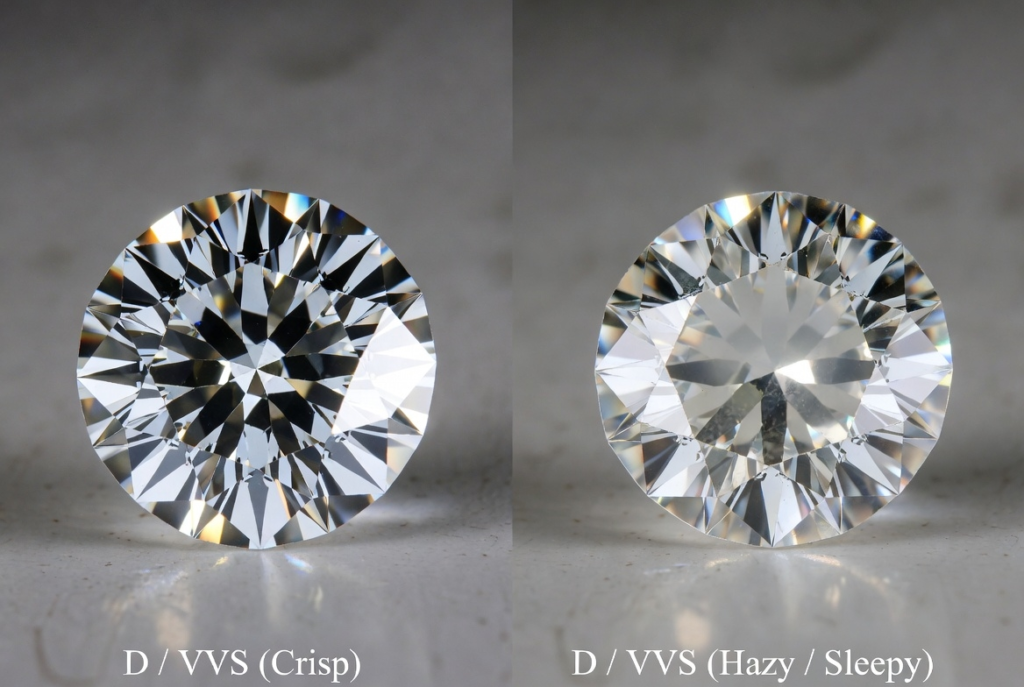
What to do: In the 360° video, look for crisp edges and strong contrast. If it looks like there’s a soft film, skip.
Red flag 2: Gray or brown undertone
This can reduce life and make the diamond look less bright in diffuse light.
What to do: Compare similar stones side-by-side in separate tabs.
Red flag 3: Bad inclusion placement
VS2 can be perfect—or it can hide a dark crystal under the table.
What to do: zoom and rotate; confirm the center area stays clean.
Red flag 4: “Paper-perfect” but dead optics
Cut labels do not always equal performance.
What to do: prefer stones that show strong on/off contrast and lively scintillation in motion.
The 60-second conversion checklist (use this before you buy)
- Does the diamond look crisp and bright in motion?
- Any haze or fogginess?
- Any persistent gray/brown cast?
- Are inclusions off-center and non-distracting?
- Is the spread (mm) strong for the carat weight?
- Do you understand the 30-day return conditions?
- If buying a ring: is your design eligible for the one free resize within the first year?
If you can answer “yes” across the board, you are in the top tier of outcomes.
FAQs
Final verdict: Should you buy a lab-grown diamond from James Allen?
If your goal is maximum visual diamond for your budget and you want an online retailer with powerful inspection tools plus policies that reduce risk, James Allen is a strong choice.
The winning approach is to buy like an expert:
- target the visual sweet spot (often F–G and VS1/VS2),
- prioritize cut/optics and verify in 360°,
- do not overpay for “paper perfection” unless it changes what you see.
James Allen’s 360° HD technology and magnification are a legitimate advantage when used intentionally, and their published return/resizing policies lower risk for online buyers.

This review is written by Nassim Parker, a diamond industry specialist and online diamond buying analyst, using a buyer-first approach focused on real-world beauty, value, and risk reduction—not hype. Our evaluations emphasize what actually determines satisfaction at delivery: optical performance in video, transparency (haze/undertone/inclusion placement), and clear retailer policies that protect you if the stone doesn’t match expectations. Some outbound links may be affiliate partnerships, which means we may earn a commission at no added cost to you; however, that never changes our conclusions—we do not recommend diamonds based on commission rate, and we prioritize objective criteria you can verify yourself (certificate + 360° inspection) so you can make a confident decision even if you buy elsewhere.