

An ownership-focused deep dive into James Allen engagement ring settings — including prong security, pavé risk, metal choice, and the durability profile of popular setting styles like cathedral, tulip, bezel, and Tiffany-style solitaires.
Author & Editorial Disclosure
By Nassim Parker, Diamond Buying Analyst
Last Updated: February 9, 2026
I’m Nassim Parker, a diamond buying analyst with 12+ years in the diamonds and precious metals industry. I’ve evaluated engagement rings not only at the moment of purchase, but years later — when prongs wear down, pavé loosens, and “pretty” design choices collide with daily life.
This guide is independent and consumer-first. It exists to reduce regret, not to sell a setting.
For the full retailer breakdown (pricing, policies, platform experience), start here:
👉 James Allen Review (2026): Transparency, Pricing & Buyer Fit
What This Guide Covers (And Why It Matters)
Most reviews treat settings as decoration. In reality, settings determine:
- whether the diamond stays secure
- how much maintenance you’ll need
- whether the ring survives daily wear gracefully
- how often you’ll worry about damage
This page focuses specifically on:
- James Allen setting quality
- James Allen ring durability over time
- Structural trade-offs in popular setting styles
Are James Allen Settings Good Quality? (Quick Durability Verdict)
Yes — James Allen settings are generally durable enough for mainstream daily wear, with a conservative design posture that favors repeatable security over fragile fashion minimalism.
The more important truth is this:
Durability depends less on the brand name and more on the setting architecture you choose.
James Allen can be an excellent long-term choice — especially if you select structurally sound designs.
How James Allen Settings Are Built (Consistency vs Boutique Craft)
James Allen is a high-volume online retailer. Their settings are typically produced through CAD-based precision manufacturing, followed by finishing and quality control.
What this model does well
- consistent prong geometry
- predictable stone seating
- fewer extreme workmanship surprises
- scalable durability across large catalogs
What this model is not
- one-of-one artisan bench forging
- experimental micro-architecture
- boutique-level hand customization by default
From a durability standpoint, consistency is often an advantage.
The Real Durability Drivers (What Makes a Setting Last)
Long-term ring durability is usually determined by four variables:
H3: Prong Security (The #1 Failure Point)
Keyword Target: James Allen prongs secure
Most diamond loss happens because prongs wear down, snag, or loosen — not because the diamond “falls out randomly.”
James Allen prongs are typically:
- standard claw or rounded profiles
- not overly needle-thin
- engineered for mainstream security
Annual inspection still matters, but the baseline architecture is generally sound.
Band Thickness and Structural Balance
Thin bands look delicate, but metal fatigue is real.
James Allen’s catalog includes thin designs, but most classic solitaires and mainstream pavé options remain within safe structural norms.
Pavé = Maintenance, Not a Defect
Pavé is inherently higher-maintenance:
- accent stones loosen over time
- beads wear down
- impact accumulates
James Allen pavé is not unusually fragile — but pavé is never “set and forget.”
Metal Choice Shapes Longevity
- Platinum: best for prong longevity and daily wear
- 14k gold: strongest value/durability balance
- 18k gold: richer tone, softer under stress
Metal is not aesthetic only — it’s structural.
James Allen Setting Types (Durability by Architecture)
This is where most buyer anxiety lives:
“Is this specific setting style safe long-term?”
Below is the durability reality by design.
James Allen Cathedral Setting Durability (Height vs Stability)
Cathedral settings lift the center stone using arches that rise from the band.
Durability strengths
- excellent structural support under the head
- visually elegant while still engineered
- often more stable than ultra-minimal peg heads
Wear trade-offs
- higher profile increases snag risk
- requires mindful wear in active lifestyles
Best for: classic buyers who want presence without fragility
Avoid if: you want the lowest-profile daily ring possible
Durability verdict: Strong, with lifestyle awareness.
James Allen Tulip Setting Durability (Beautiful, But Prong-Exposed)
Tulip settings use petal-like prongs that flare upward.
Why buyers love them
- romantic, sculptural look
- premium boutique aesthetic
Durability considerations
- prongs can be more exposed than standard solitaires
- fine petal shapes may wear faster over decades
- inspection matters more here
Best for: aesthetic-driven buyers willing to maintain
Avoid if: you want the lowest-maintenance structure
Durability verdict: Elegant, but not the most rugged architecture.
James Allen Bezel Setting Durability (Maximum Security Choice)
A bezel surrounds the diamond’s edge in metal.
Durability advantages
- one of the most protective settings available
- minimizes prong failure risk
- ideal for active wearers
Trade-offs
- slightly less edge visibility
- can require more cleaning to maintain brightness
Best for: active lifestyles, longevity-first buyers
Avoid if: you want maximum exposed sparkle edge
Durability verdict: The most secure setting style James Allen offers.
James Allen Tiffany-Style Setting Durability (Classic Six-Prong Reality)
Safe phrasing: Tiffany-style six-prong solitaire
“Tiffany-style” refers to the classic six-prong solitaire silhouette — not a literal Tiffany product.
Why it lasts
- six prongs provide redundancy
- timeless proportions
- structurally proven over generations
Long-term reality
- prongs still wear over time
- higher-set versions can snag
- inspections remain essential
Best for: buyers wanting timeless durability with tradition
Avoid if: you want ultra-low profile modern design
Durability verdict: Classic, secure, and historically validated.
James Allen Setting Durability Comparison (By Setting Style)
This table compares the most common James Allen engagement ring setting styles by long-term durability, maintenance expectations, and real-world wear suitability.
| Setting Style | Durability Profile | Maintenance Level | Security Risk | Best For | Who Should Avoid |
|---|---|---|---|---|---|
| Bezel Setting | ★★★★★ Highest | Low | Very Low | Active lifestyles, daily wear, longevity-first buyers | Those who want maximum exposed diamond edge |
| Cathedral Setting | ★★★★☆ High | Low–Moderate | Low | Classic look with added support, medium-to-large stones | Buyers wanting ultra-low profile rings |
| Tiffany-Style Six-Prong Solitaire | ★★★★☆ High | Moderate | Low | Timeless design, redundancy in prong security | Very active wearers who snag jewelry often |
| Standard Four-Prong Solitaire | ★★★☆☆ Moderate | Moderate | Moderate | Minimalist aesthetics, classic simplicity | Buyers wanting maximum redundancy |
| Tulip Setting | ★★★☆☆ Moderate | Moderate–High | Moderate | Design-forward buyers who accept maintenance | Those wanting lowest long-term upkeep |
| Pavé Band (Any Style) | ★★☆☆☆ Lower | High | Moderate–High | Occasional wearers, sparkle-focused designs | Low-maintenance or very active lifestyles |
| Ultra-Thin / Fashion Band | ★☆☆☆☆ Lowest | High | High | Editorial / aesthetic-first buyers | Anyone prioritizing durability |
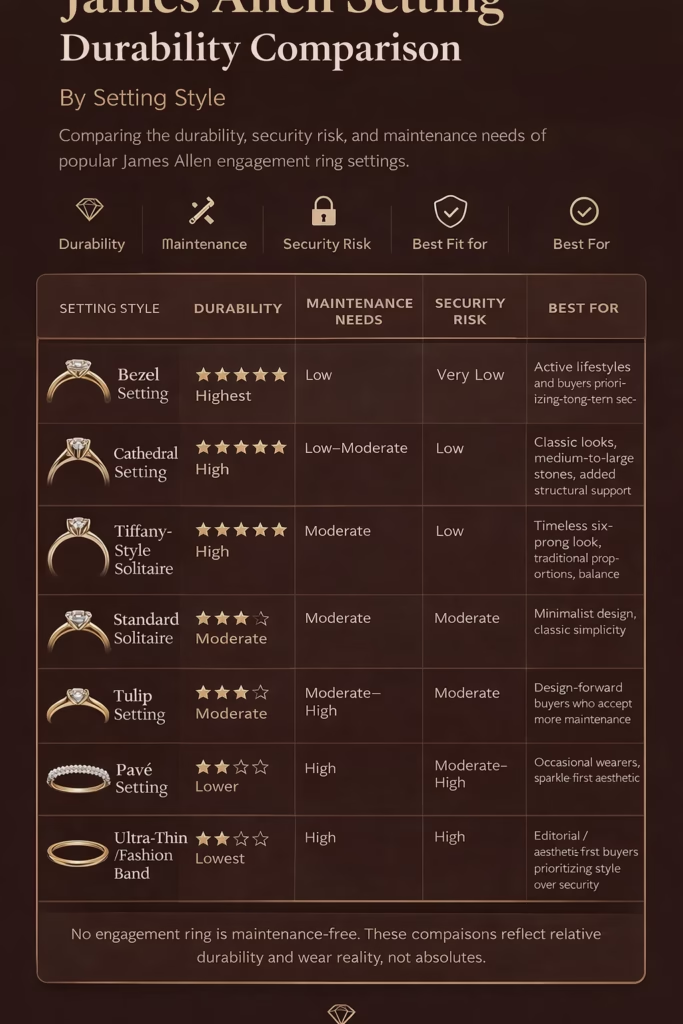
How to Read This Table (Important Context)
- Durability Profile reflects long-term structural resilience, not beauty or price.
- Maintenance Level assumes normal wear + annual inspections.
- Security Risk refers to likelihood of stone loosening over years, not immediate failure.
- No engagement ring is maintenance-free — this table shows relative risk, not absolutes.
Editorial Takeaway (Conversion Copy)
If durability is your top priority, bezel, cathedral, and six-prong solitaire settings offer the strongest long-term security in James Allen’s catalog.
If sparkle density or ultra-thin aesthetics matter more, accept that maintenance is part of the design choice, not a defect.
Buying or Changing a James Allen Setting (What Buyers Ask Most)
Can you buy a James Allen setting only?
James Allen primarily sells settings as part of a ring purchase, though availability and policies vary. Compatibility with outside stones is not always guaranteed.
Can you change your setting later?
Setting changes are possible in some cases, but often involve:
- design limitations
- labor costs
- potential return/exchange timing restrictions
Are there setting or customization fees?
Custom design work, engraving, or non-standard modifications may be final sale or carry additional cost. Always confirm before checkout.
Ownership advice:
Treat the setting as a long-term structural decision, not an accessory swap.
Who James Allen Settings Are Best For (Durability Lens)
Strong fit
- daily wearers choosing classic solitaires or cathedral builds
- buyers selecting platinum or 14k gold
- shoppers wanting consistency and predictability
Use caution
- ultra-thin pavé-heavy designs
- high-set heads for very active lifestyles
- buyers expecting zero maintenance forever
Final Durability Verdict — Are James Allen Settings Worth It Long-Term?
James Allen settings are generally durable, well-engineered for mainstream wear, and structurally conservative compared to fragile fashion-forward brands.
The right conclusion is not:
“James Allen is perfect.”
The right conclusion is:
James Allen is a strong choice when buyers choose architectures that match real life.
If durability is your priority, bezel, cathedral, and classic six-prong solitaires are the safest long-term paths.
